
NASA Prepares Small Satellites for Launch as Part of Transporter-18 Mission
13.10.2026, 21:22·
COLLECTED AND VERIFIED AUTOMATICALLY
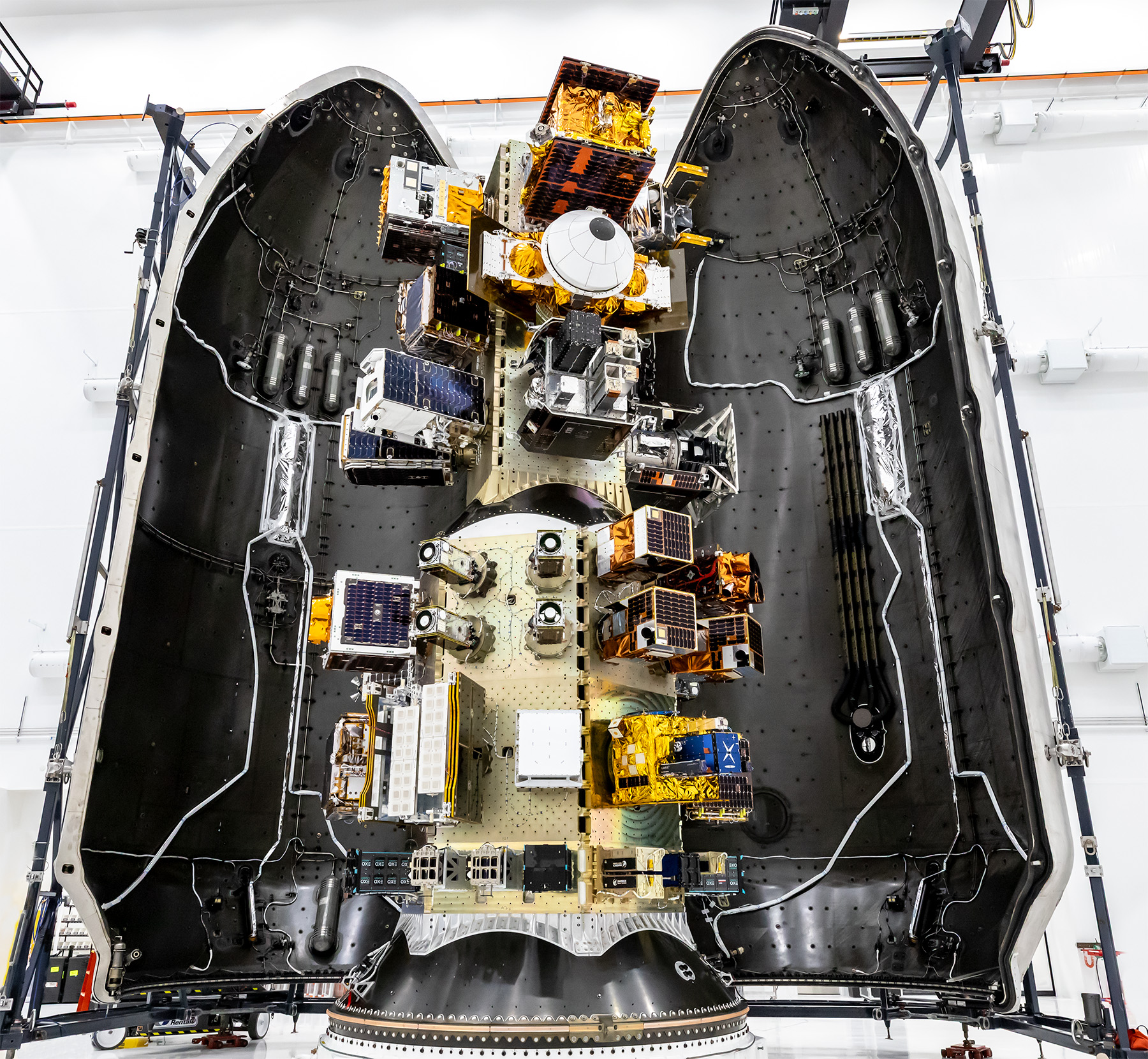
NASA presented three small spacecraft that, along with a number of commercial payloads, will be encapsulated in a SpaceX Falcon 9 launch vehicle before launch scheduled for October 1, 2026 as part of the Transporter-18 mission. Among the spacecraft are the CubeSat ASCENT Propulsion Dual Mode, designed to test a propulsion system; the Supernova Remnants and Proxies for ReIonization Testbed Experiment (SPRITE), which will study supernova remnants and the Universe's reionization processes; as well as the Small Spacecraft Propulsion and Inspection Capability (SSPICY)—a mission demonstrating new propulsion system technologies and inspection capabilities for small spacecraft. All three projects are being implemented with NASA support and are aimed at testing advanced technologies for future space missions, including improved propulsion systems and instruments for scientific observations. The launch will take place under SpaceX's rideshare program, which allows multiple small satellites to be deployed into orbit simultaneously, reducing the cost of space access for research and commercial organizations. Encapsulation is an important preparation stage in which satellites are placed under the rocket's fairing for protection during launch and passage through the dense layers of the atmosphere. After reaching orbit, the spacecraft will begin executing their scientific and technological programs, the results of which could influence the development of small spacecraft platforms and remote sensing methods.
This article was generated and published automatically from verified sources. If you spot an inaccuracy, it will be corrected on the pipeline's next pass.