
Chandra Telescope Helps Uncover the Origin of the Treble Clef Radio Structure
15.10.2026, 17:51·
COLLECTED AND VERIFIED AUTOMATICALLY
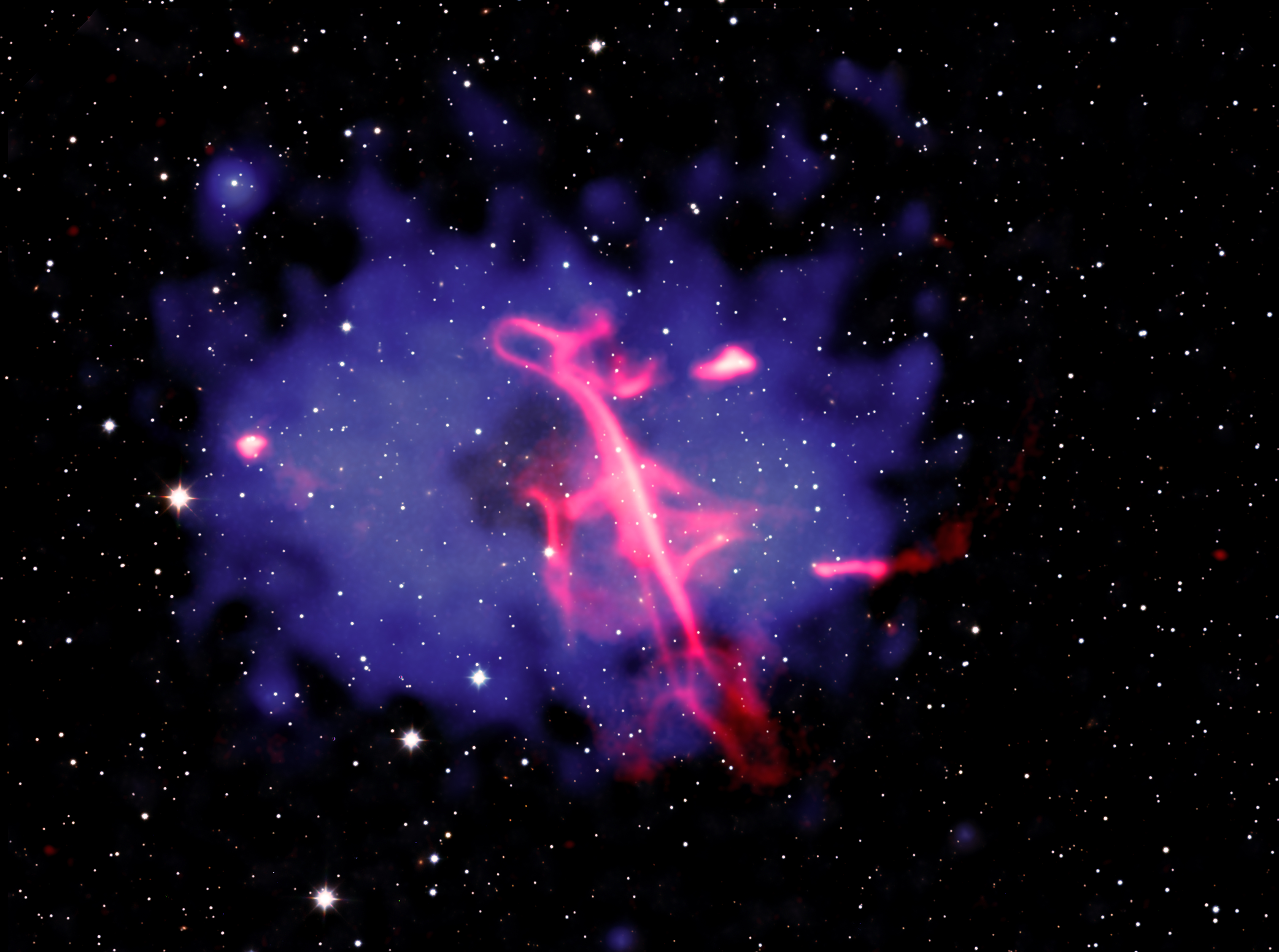
Astronomers using data from NASA's Chandra X-ray space observatory have come closer to understanding the nature of an unusual radio wave structure that received the informal name "Treble Clef." The object was named this way because of its distinctive shape, which visually resembles the musical symbol of a treble clef.
Researchers analyzed X-ray radiation in this region using the capabilities of the Chandra telescope, which allowed them to propose a hypothesis about the possible origin of this structure. Such formations are created as a result of complex physical processes related to the interaction of charged particles and magnetic fields in space, and their study helps astronomers better understand the dynamics of processes occurring in remote regions of the Universe.
The Chandra space observatory, operating in near-Earth orbit since 1999, specializes in observing X-ray radiation from various astronomical objects—from the remnants of supernovae to supermassive black holes. Thanks to the high sensitivity of its instruments, the telescope allows scientists to detect and analyze objects whose radiation is not accessible for observation in the optical range.
The discovery of such unusual formations as the Treble Clef demonstrates how diverse and complex the processes occurring in space are, and underscores the importance of continuing observations using modern X-ray telescopes to expand scientific knowledge about the Universe.
This article was generated and published automatically from verified sources. If you spot an inaccuracy, it will be corrected on the pipeline's next pass.