
NASA to Participate in JAXA Mission to Study Mars's Moons
15.10.2026, 23:55·
COLLECTED AND VERIFIED AUTOMATICALLY
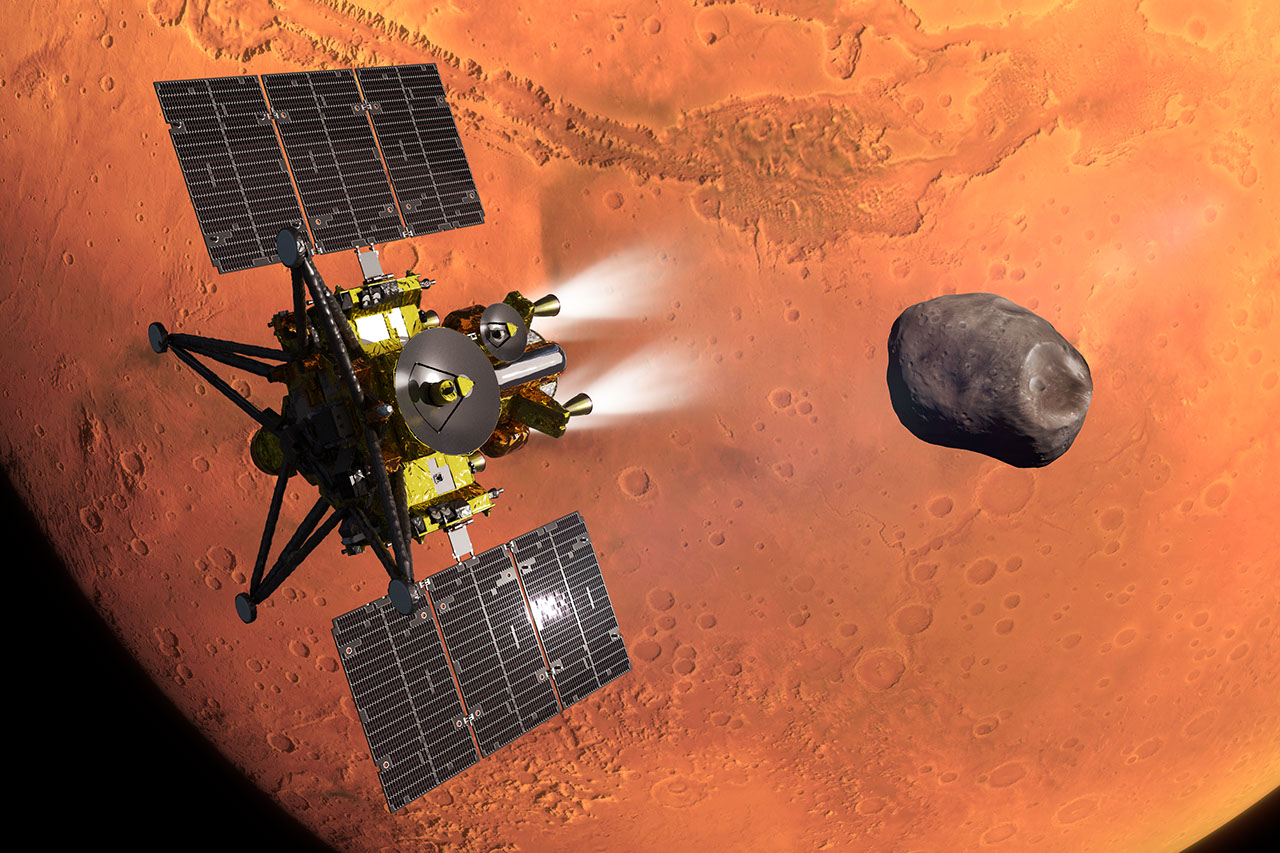
NASA has announced its participation in the Japan Aerospace Exploration Agency's (JAXA) MMX (Martian Moons eXploration) mission, which aims to expand knowledge about Mars's moons. The project continues the American space agency's long history of exploring the Red Planet.
The primary objective of the MMX mission is to characterize and determine the origin of Mars's two moons, Phobos and Deimos. Scientists have not yet reached a consensus on the nature of these celestial bodies: according to one theory, they are captured asteroids, while according to another, they formed as a result of a large object colliding with Mars.
As part of the mission, it is planned to deliver a soil sample from the surface of one of the moons to Earth for detailed laboratory analysis. This will allow researchers to obtain more precise data on the composition and formation history of the moons, as well as shed light on the evolution of the Martian system itself.
NASA's participation in the project underscores the importance of international cooperation in space exploration and continues the tradition of joint missions with the Japanese space agency. The results of the study could significantly expand our understanding of the processes involved in the formation of celestial bodies in the Solar System.
This article was generated and published automatically from verified sources. If you spot an inaccuracy, it will be corrected on the pipeline's next pass.