
NASA Glenn Research Center Uses Advanced Instruments to Measure Aviation Noise and Airflow
19.10.2026, 20:17·
COLLECTED AND VERIFIED AUTOMATICALLY
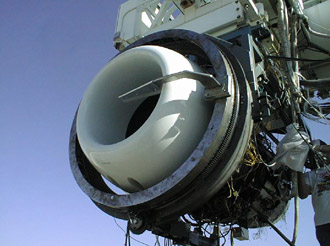
NASA Glenn Research Center applies specialized measurement technologies to study airflow and sound in aviation testing. Among the methods used are digital particle image velocimetry, hot wire anemometry, Raman spectroscopy, as well as microphone systems organized in phased arrays or mounted on continuously rotating structures — so-called rotating rakes.
These instruments allow scientists to obtain precise data on airflow characteristics and noise sources arising from the operation of aircraft engines and other components of aircraft. The information obtained plays a key role for the global scientific community addressing the problem of reducing aviation noise.
Data from experiments conducted at NASA Glenn Research Center is used by specialists around the world to verify theoretical models and calibrate software designed to predict noise levels under various aircraft operating conditions. This contributes to the development of quieter and more efficient aviation technologies, which is significant for both aircraft manufacturers and regulatory bodies that establish noise pollution standards near airports.
The center's work in this field continues to remain an important link in the chain of international research aimed at advancing aviation technology while considering environmental and social factors associated with noise impact on the environment and population.
This article was generated and published automatically from verified sources. If you spot an inaccuracy, it will be corrected on the pipeline's next pass.