
Thin Section of Martian Meteorite Teghaza 001 Helps Determine the Age of the Oldest Rock Sample
30.10.2026, 02:08·
COLLECTED AND VERIFIED AUTOMATICALLY
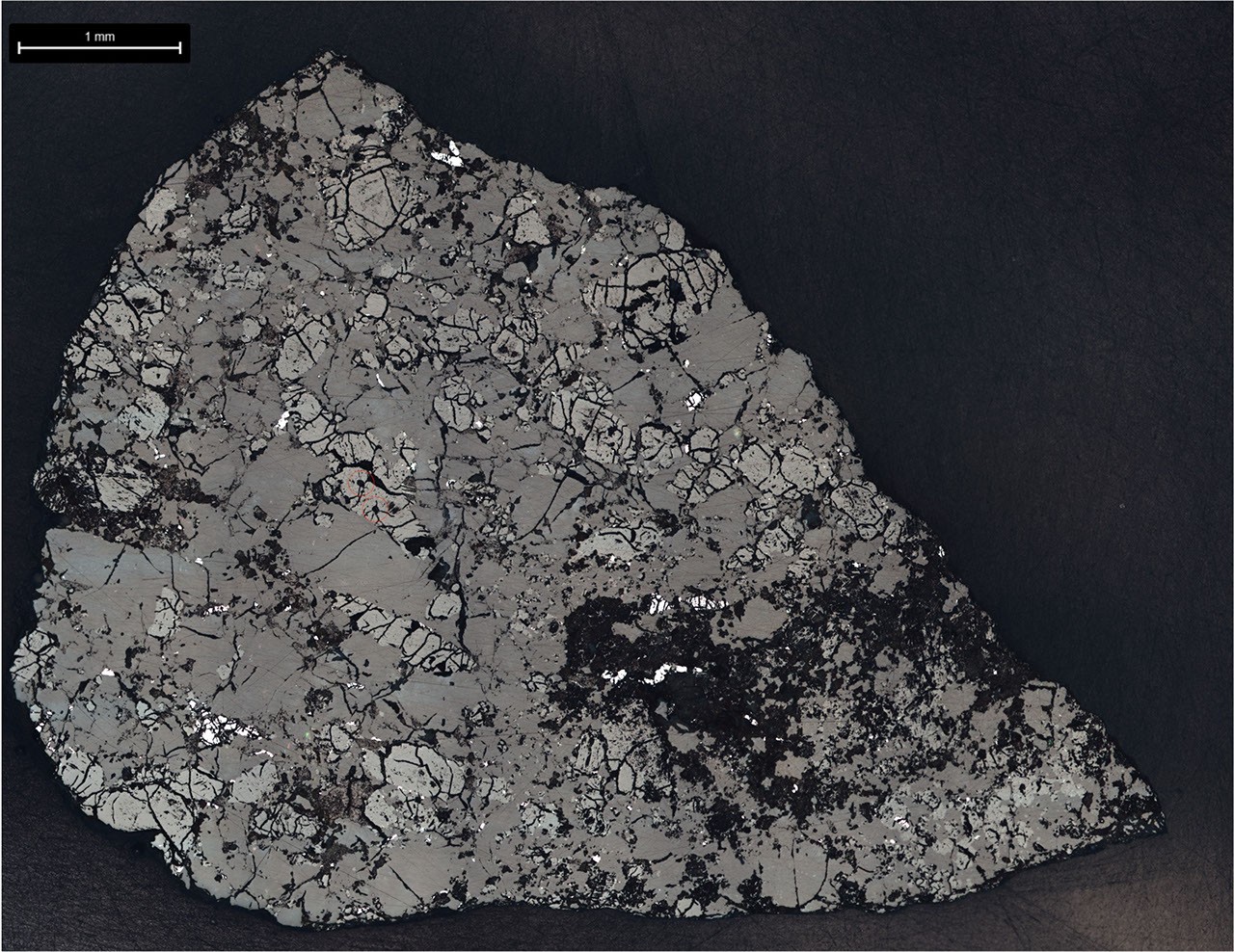
The Teghaza 001 meteorite is considered one of the oldest samples of Martian rock ever discovered on Earth. To study its age, scientists prepared a thin section of the stone and examined it using reflected light images. Such images serve as a kind of map for researchers, allowing them to locate minerals of scientific interest for subsequent detailed analysis using various instruments. A separate image, designated as "Figure A," represents the same section area but with additional markings that facilitate the identification of individual mineral structures. Such studies of Martian meteorites play an important role in understanding the geological history of Mars, as these samples contain information about processes that occurred on the planet billions of years ago. Analysis of the mineral composition and age of the rock helps scientists reconstruct the chronology of the formation of the Martian crust and understand how conditions on the planet changed over time. Research of such meteorites continues to provide scientists with valuable data that cannot be obtained in any other way without conducting costly missions to deliver samples from Mars to Earth.
This article was generated and published automatically from verified sources. If you spot an inaccuracy, it will be corrected on the pipeline's next pass.