
James Webb Telescope Captures Image of the Cat's Head Nebula
30.10.2026, 18:12·
COLLECTED AND VERIFIED AUTOMATICALLY
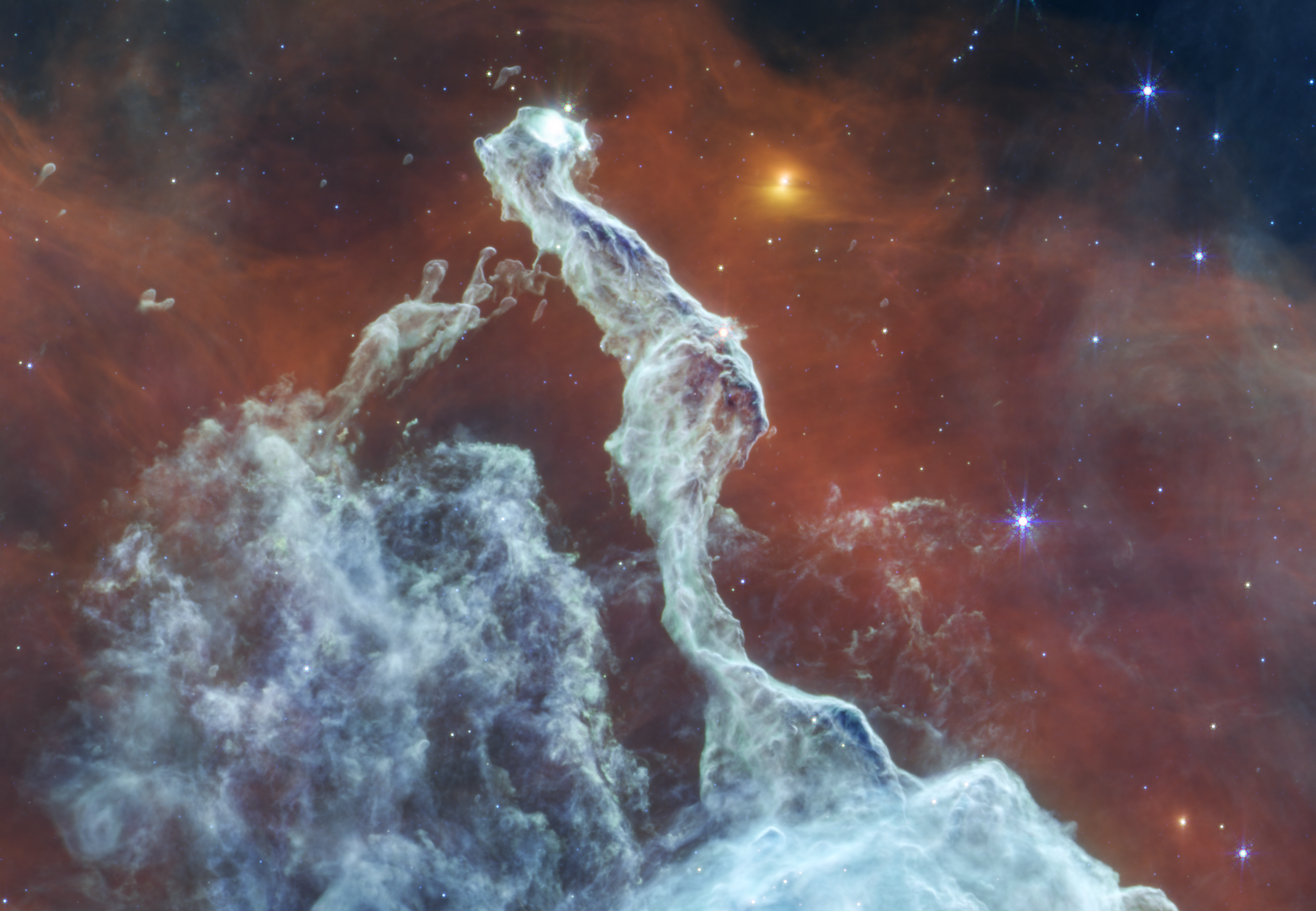
NASA's James Webb Space Telescope has provided a new image of the Cat's Head Nebula, captured in the mid-infrared range. The image captures the delicate and complex structures within the nebula that are normally hidden from observation in visible light.
The image reveals details formed by warm dust and carbon-containing molecules. These substances glow due to exposure to intense radiation from neighboring stars, which allows scientists to study processes occurring in the interstellar medium.
The use of the mid-infrared range makes it possible to see through dense clouds of gas and dust that are opaque to optical telescopes. This enables astronomers to study the nebula's structure in greater detail and investigate the star formation processes occurring in its vicinity.
James Webb, launched into space in late 2021, continues to provide scientists with unique data about various objects in the Universe—from distant galaxies to nearby nebulae in our own galaxy. Such images help deepen our understanding of the physical and chemical processes that shape clouds of gas and dust, from which new stars and planetary systems are subsequently born.
This article was generated and published automatically from verified sources. If you spot an inaccuracy, it will be corrected on the pipeline's next pass.