
Hubble Archive Data Suggests Second-Generation Planets Around White Dwarfs
05.10.2026, 19:37·
COLLECTED AND VERIFIED AUTOMATICALLY
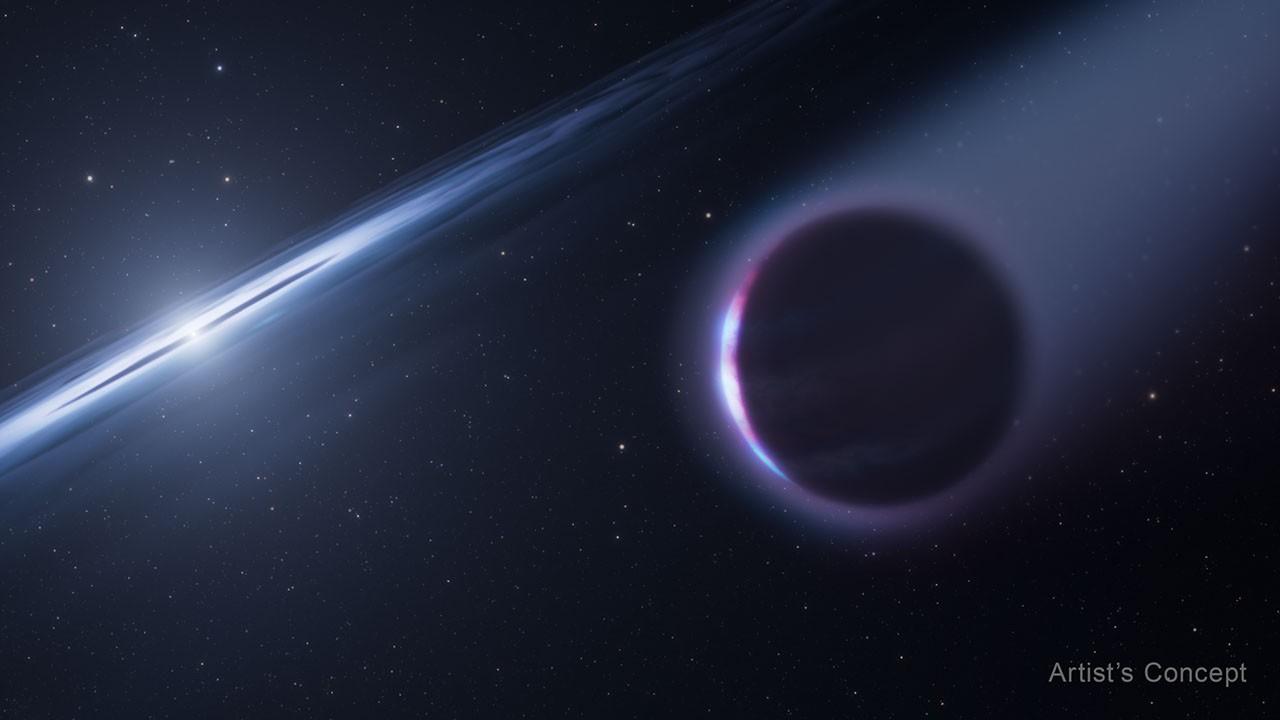
Astronomers who analyzed archival data from the Hubble Space Telescope have found new evidence for the existence of so-called second-generation planets around white dwarfs — the cooling cores of stars that have passed through the red giant stage and shed their outer layers. It is believed that such planets form after the demise of the star's original planetary system, from the remnants of material surrounding the white dwarf.
This research helped resolve a long-standing puzzle that has puzzled NASA scientists for many years: unusual signals and features detected around some white dwarfs previously lacked a definitive explanation. The new analysis of Hubble archival observations suggests that these anomalies may be linked to the presence of secondary planetary bodies that formed during the late stages of stellar system evolution.
The discovery is significant for understanding how planetary systems can arise and survive even after catastrophic events, such as a star's transformation into a white dwarf. This broadens scientists' understanding of the diversity of planetary formation pathways in the universe and raises new questions about how common such second-generation systems might be.
Researchers note that confirming the hypothesis will require additional observations using modern telescopes, including the James Webb Space Telescope, which possesses greater sensitivity. Nevertheless, the finding is already considered a significant step in studying the final stages of stellar system evolution and the fate of planets after the death of their parent stars.
This article was generated and published automatically from verified sources. If you spot an inaccuracy, it will be corrected on the pipeline's next pass.