
NASA's CHAPEA Analog Mars Mission Crew Completes Year-Long Experiment
02.11.2026, 21:12·
COLLECTED AND VERIFIED AUTOMATICALLY
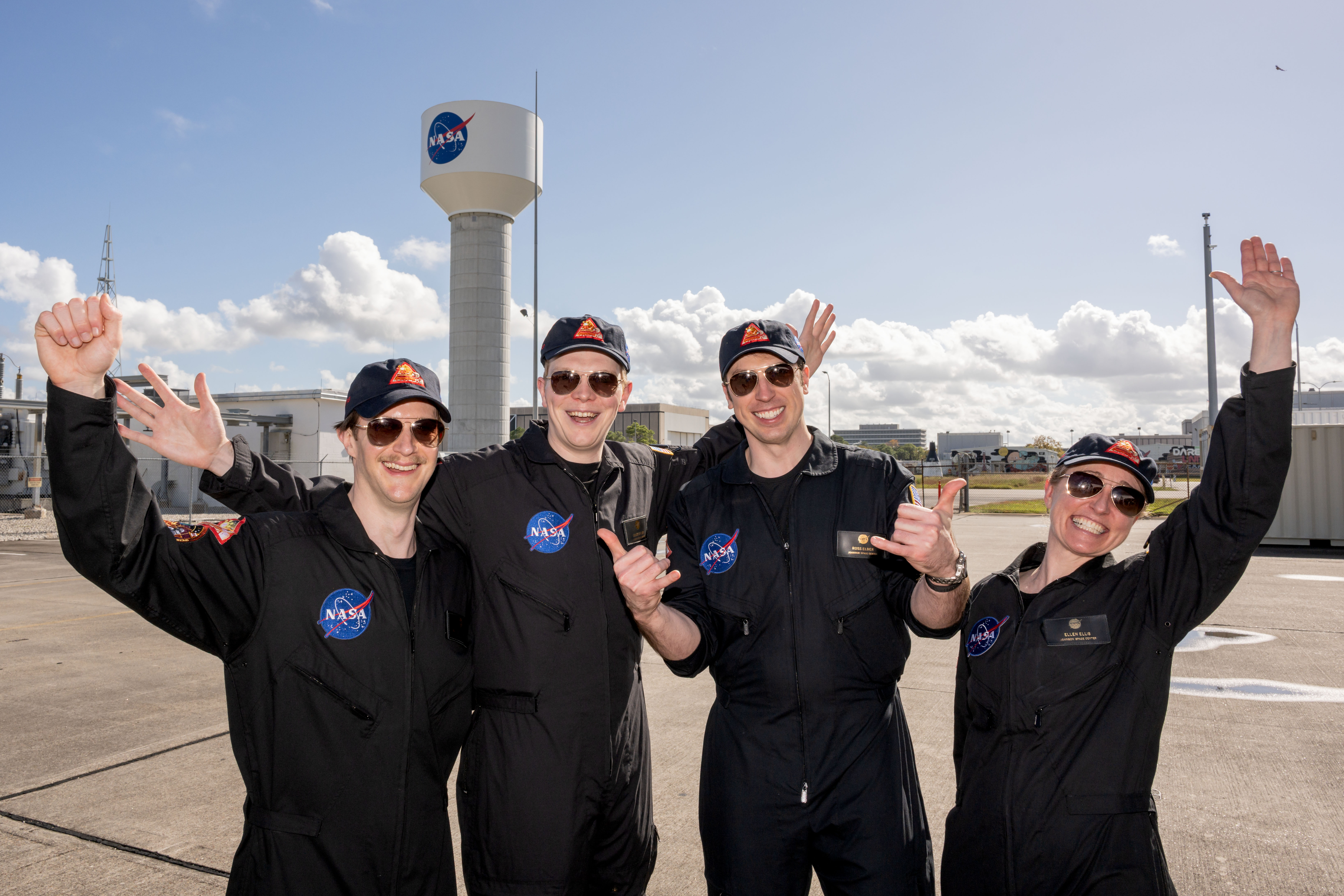
NASA announced the completion of another phase of the Crew Health and Performance Exploration Analog (CHAPEA) program — a ground-based experiment simulating conditions of a long-duration mission to Mars. Four participants — Matthew Montgomery, James Spicer, Ross Alder, and Ellen Ellis — spent more than a year in an isolated module reproducing conditions of the Martian surface and the constraints of space travel.
On October 31, 2026, the crew stepped outdoors for the first time in an extended period, symbolically completing their "return to Earth" after simulating an extended voyage. Throughout the experiment, participants faced limited resources, communication delays characteristic of real interplanetary missions, and performed tasks approximating conditions of a future Mars expedition.
The goal of the CHAPEA project is to study how prolonged isolation, limited access to supplies, and the stress of extended space travel affect the crew's physical health, psychological state, and performance. The data obtained will help NASA develop safer and more effective protocols for future crewed missions to Mars, including questions of nutrition, physical exercise, and psychological support for the crew.
The experiment is part of NASA's broader program preparing for human missions to Mars, planned for subsequent decades, and complements other ground-based and orbital research aimed at minimizing risks of deep space travel.
This article was generated and published automatically from verified sources. If you spot an inaccuracy, it will be corrected on the pipeline's next pass.