
NASA Tests Autonomous Navigation Technology for Planetary Landing
04.11.2026, 19:28·
COLLECTED AND VERIFIED AUTOMATICALLY
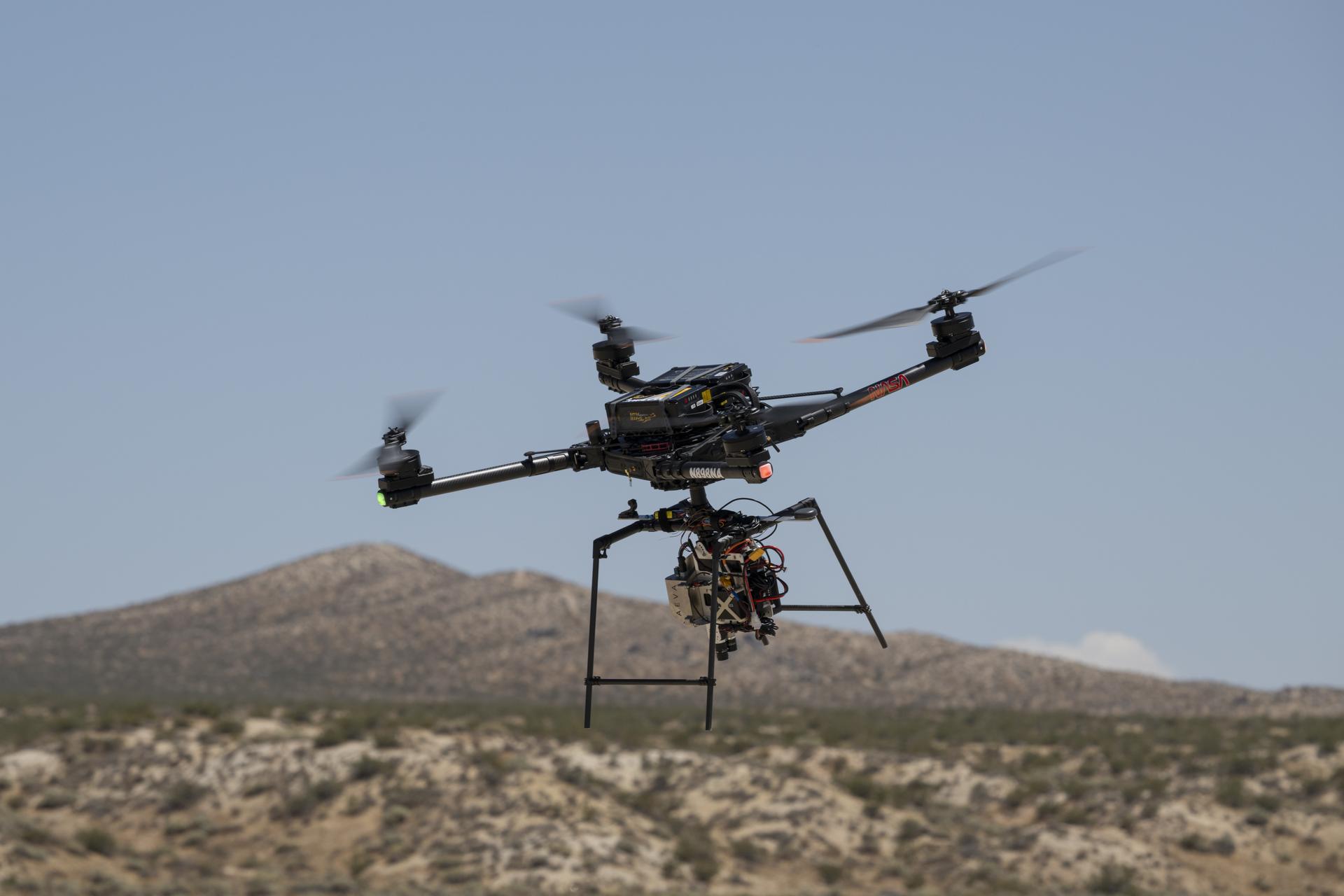
NASA conducted a successful test of technology designed for autonomous navigation of spacecraft during landing on the Moon and other planets. As part of the experiment, the Alta-X drone equipped with the SPLICE (Safe and Precise Landing – Integrated Capabilities Evolution) guidance, navigation, and control system performed maneuvers simulating descent and landing on the lunar surface. The test took place on August 27.
The SPLICE system is being developed by NASA to improve the accuracy and safety of spacecraft landings in conditions of complex terrain—the agency is considering its use in future missions, including the Artemis program to return humans to the Moon. The technology uses sensors and real-time data processing algorithms that allow the spacecraft to independently identify hazardous zones—rocks, craters, and surface irregularities—and adjust the descent trajectory to select an optimal and safe landing site without intervention from an operator on Earth.
Tests using the Alta-X drone allow NASA engineers to refine the system's operation in Earth conditions before its application in actual space missions. Such ground-based demonstrations are important for verifying the reliability of algorithms and hardware in conditions approximating real scenarios, before the technology is integrated into landing modules destined for the Moon, Mars, or other bodies in the Solar System.
The successful completion of the experiment is regarded as an important step toward creating more autonomous and safer landing systems, which is particularly relevant for crewed missions, where the precision of landing site selection is critical for the safety of astronauts and the success of scientific objectives.
This article was generated and published automatically from verified sources. If you spot an inaccuracy, it will be corrected on the pipeline's next pass.