
The Problem of Electrostatic Charge Accumulation on Spacesuits at the Moon's South Pole
06.10.2026, 22:01·
COLLECTED AND VERIFIED AUTOMATICALLY
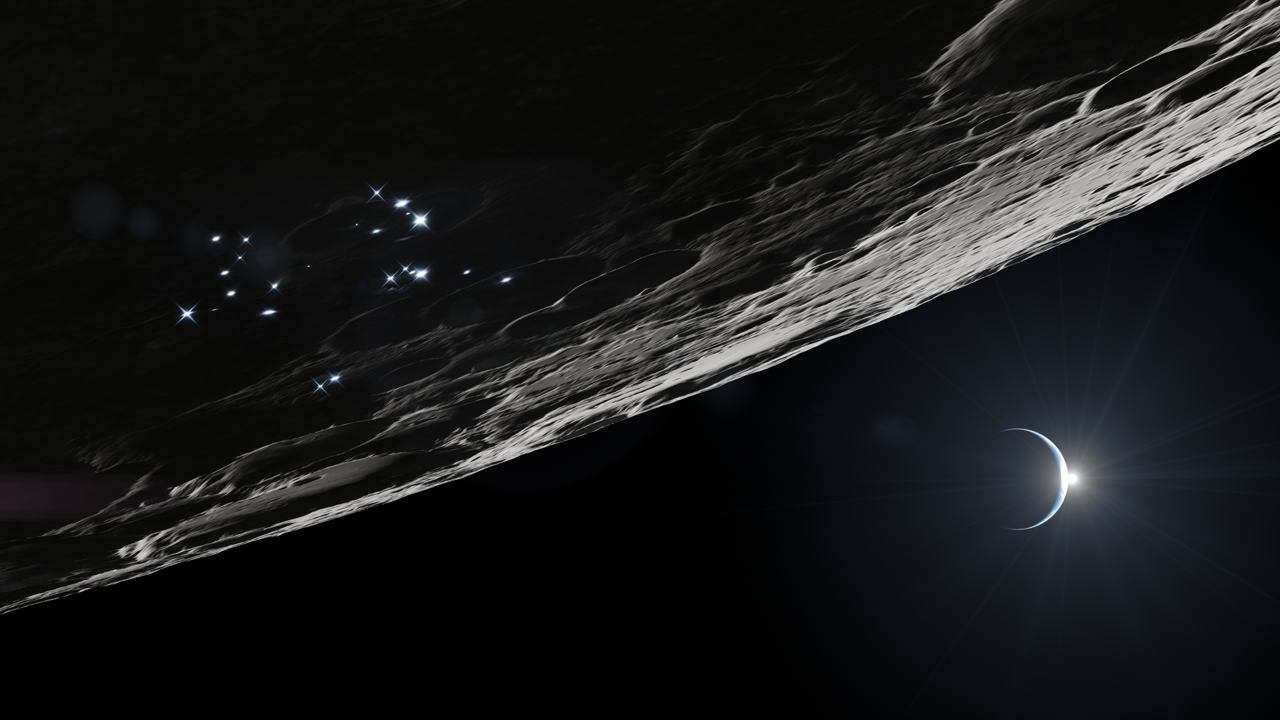
As an astronaut moves across the lunar south pole surface, electrical charge accumulates on the spacesuit through two mechanisms: tribocharging, which arises from contact and friction with lunar regolith, and plasma charging from the surrounding cosmic plasma. This problem is significantly exacerbated when entering areas of lunar shadow, including the so-called Permanently Shadowed Regions (PSR), which are of particular interest for future missions due to the presumed presence of water ice.
In such dark and cold zones, devoid of direct sunlight, the spacesuit can accumulate significant negative electrical potential. The absence of solar ultraviolet radiation, which in illuminated areas contributes to partial charge neutralization through photoelectron emission, worsens the situation in shadow. This creates additional risks both for the spacesuit and its electronics, as well as for astronaut safety, since electrostatic discharges can damage sensitive equipment or cause other technical malfunctions.
Given plans to develop the Moon's south pole as part of future crewed missions, including the Artemis program, the question of spacesuit electrostatic charging becomes practically significant. Understanding the mechanisms of charge accumulation under conditions of permanent shadow is necessary for developing protective measures, materials, and design solutions capable of minimizing electrostatic risks during extended surface activities near craters that are never illuminated by the Sun.
This article was generated and published automatically from verified sources. If you spot an inaccuracy, it will be corrected on the pipeline's next pass.