
SPHEREx Telescope Discovers Diversity of Brown Dwarfs
08.10.2026, 22:09·
COLLECTED AND VERIFIED AUTOMATICALLY
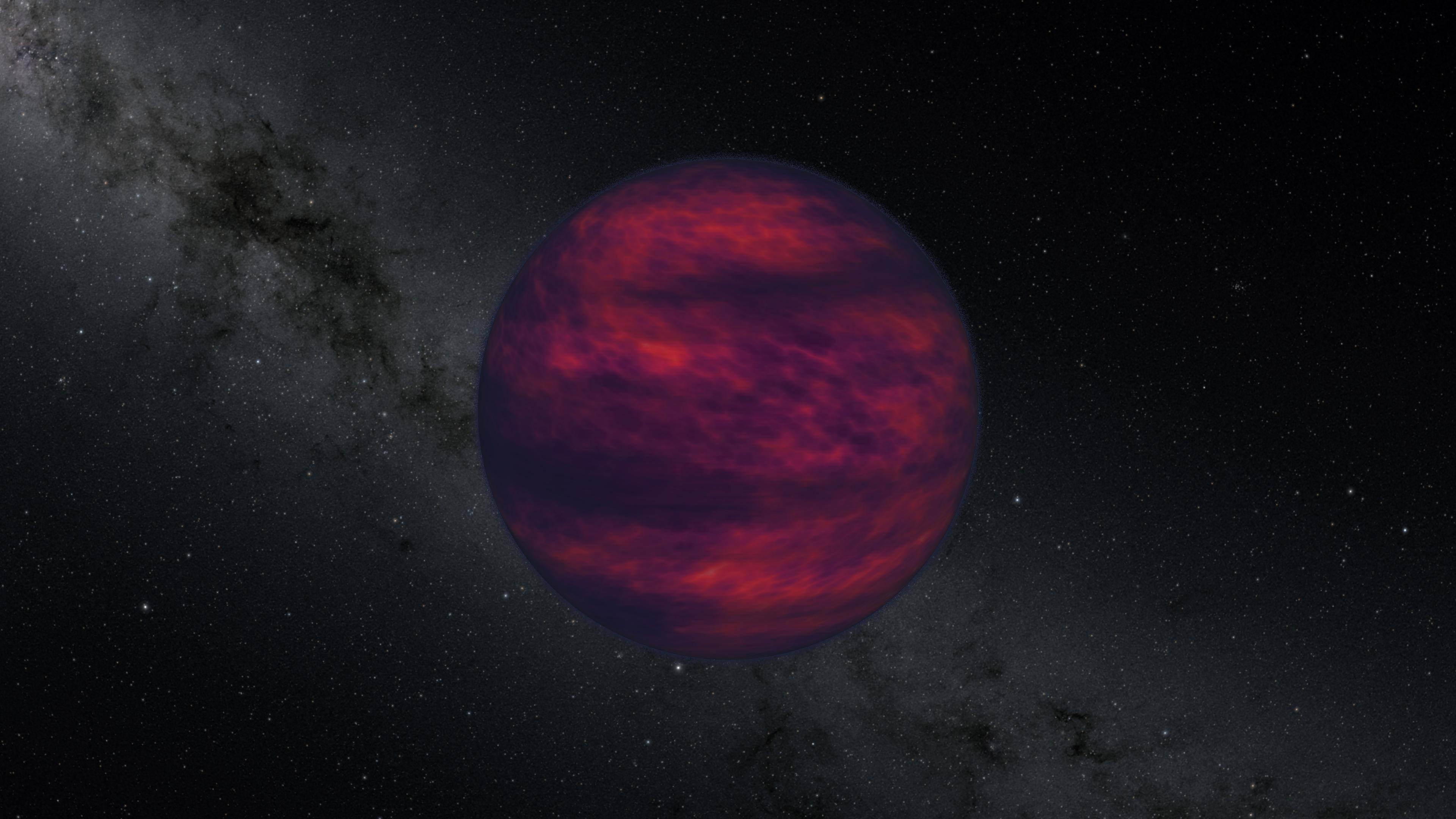
NASA's space telescope SPHEREx (Spectro-Photometer for the History of the Universe, Epoch of Reionization, and Ices Explorer) has provided new data on brown dwarfs — mysterious celestial bodies that in their characteristics lie between stars and exoplanets. These objects are too small to sustain hydrogen nuclear fusion like true stars, yet are significantly more massive than planets.
A new study published in The Astrophysical Journal revealed that the atmospheres of brown dwarfs exhibit significant chemical diversity. Scientists discovered that the cloud layers of these dark worlds are similar in composition to the atmospheres of gas giants, such as Jupiter and Saturn.
SPHEREx, launched to study the history of the Universe and search for water and organic molecules in our Galaxy, proved to be an effective instrument for analyzing the spectral characteristics of brown dwarfs. Thanks to its ability to scan the sky in the infrared range, the telescope allows scientists to obtain detailed information about the chemical composition of these objects' atmospheres.
The data obtained helps astronomers better understand the processes of formation and evolution of brown dwarfs, as well as their place in the broader picture of star and planetary system formation. The study also provides new insights into the boundary between stars and planets, which has long been the subject of scientific debate.
These results are part of SPHEREx's broader mission to map the entire sky and collect data on various cosmic objects, contributing to expanding humanity's knowledge of the Universe.
This article was generated and published automatically from verified sources. If you spot an inaccuracy, it will be corrected on the pipeline's next pass.