
James Webb Telescope Determines Distance to the Most Distant Fast Radio Burst
08.10.2026, 22:09·
COLLECTED AND VERIFIED AUTOMATICALLY
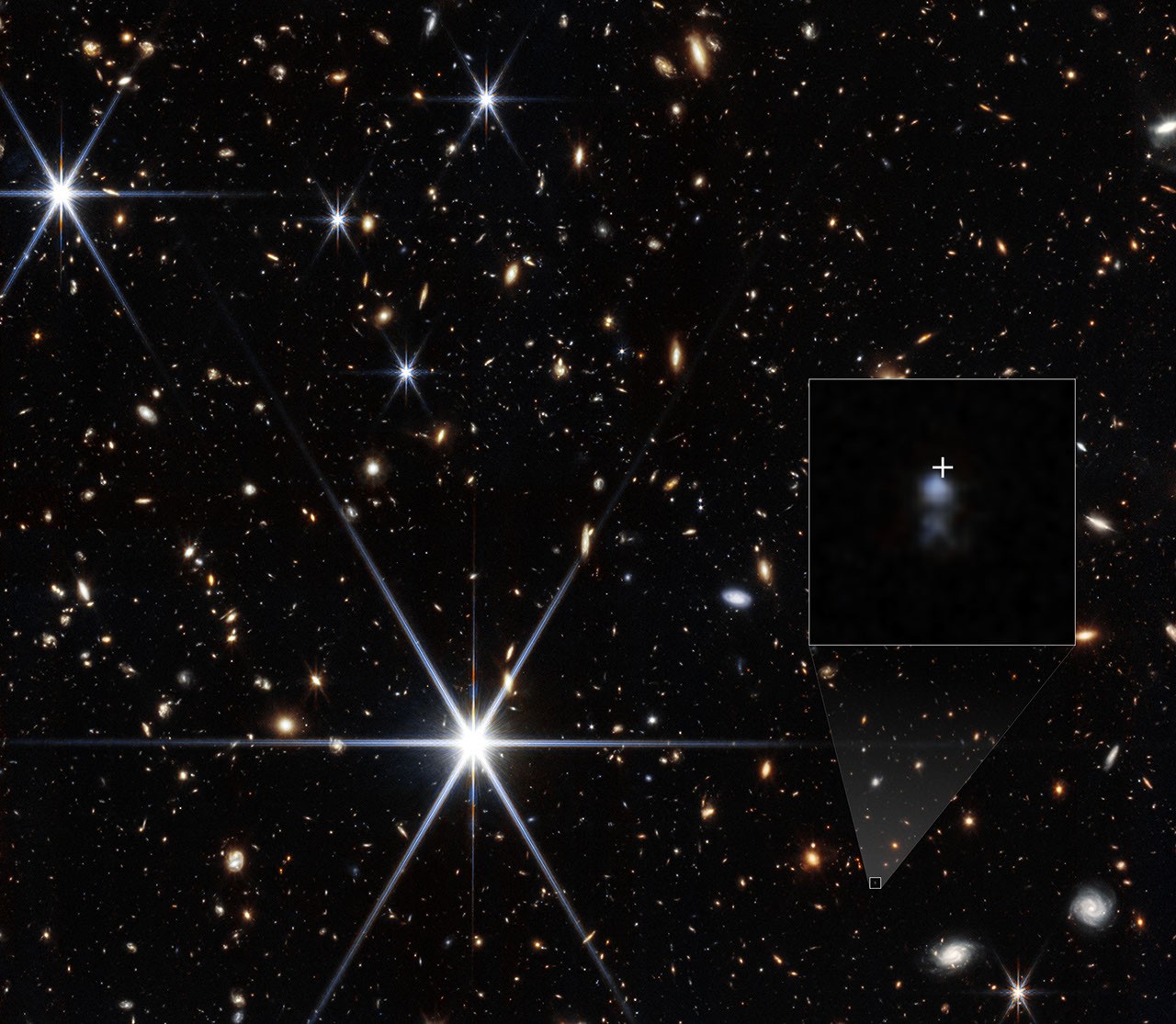
Fast radio bursts (FRB) are brief, millisecond-long flashes of radio radiation emanating from distant space. Such phenomena were first detected in 2007, yet their nature remains a mystery, as most bursts are observed only once and never repeat.
A team of astronomers, using NASA's James Webb Space Telescope (JWST), has successfully identified the host galaxy of the most distant fast radio burst recorded to date. Thanks to the telescope's high sensitivity and resolving power, scientists have refined the distance to the radiation source, allowing them to obtain new data about the possible origin of this phenomenon.
Determining the precise location and distance to the source galaxy is crucial for understanding the physical mechanisms that generate FRBs. Among the hypotheses about the nature of these bursts are magnetars—neutron stars with extremely strong magnetic fields—as well as other exotic astrophysical processes. Studying the most distant known burst may help scientists better understand how conditions in the Universe changed during its early stages of evolution and what role such flashes play in studying the distribution of matter in space.
This discovery demonstrates the growing capabilities of the James Webb telescope not only in studying distant galaxies and exoplanets, but also in investigating brief and hard-to-detect cosmic phenomena. Further observations and data analysis will help astronomers develop a more complete picture of the origin of fast radio bursts and their connection to processes occurring in distant galaxies.
This article was generated and published automatically from verified sources. If you spot an inaccuracy, it will be corrected on the pipeline's next pass.