
Chandra Telescope Uncovers Possible Origin of 'Treble Clef' Radio Waves
15.10.2026, 17:51·
COLLECTED AND VERIFIED AUTOMATICALLY
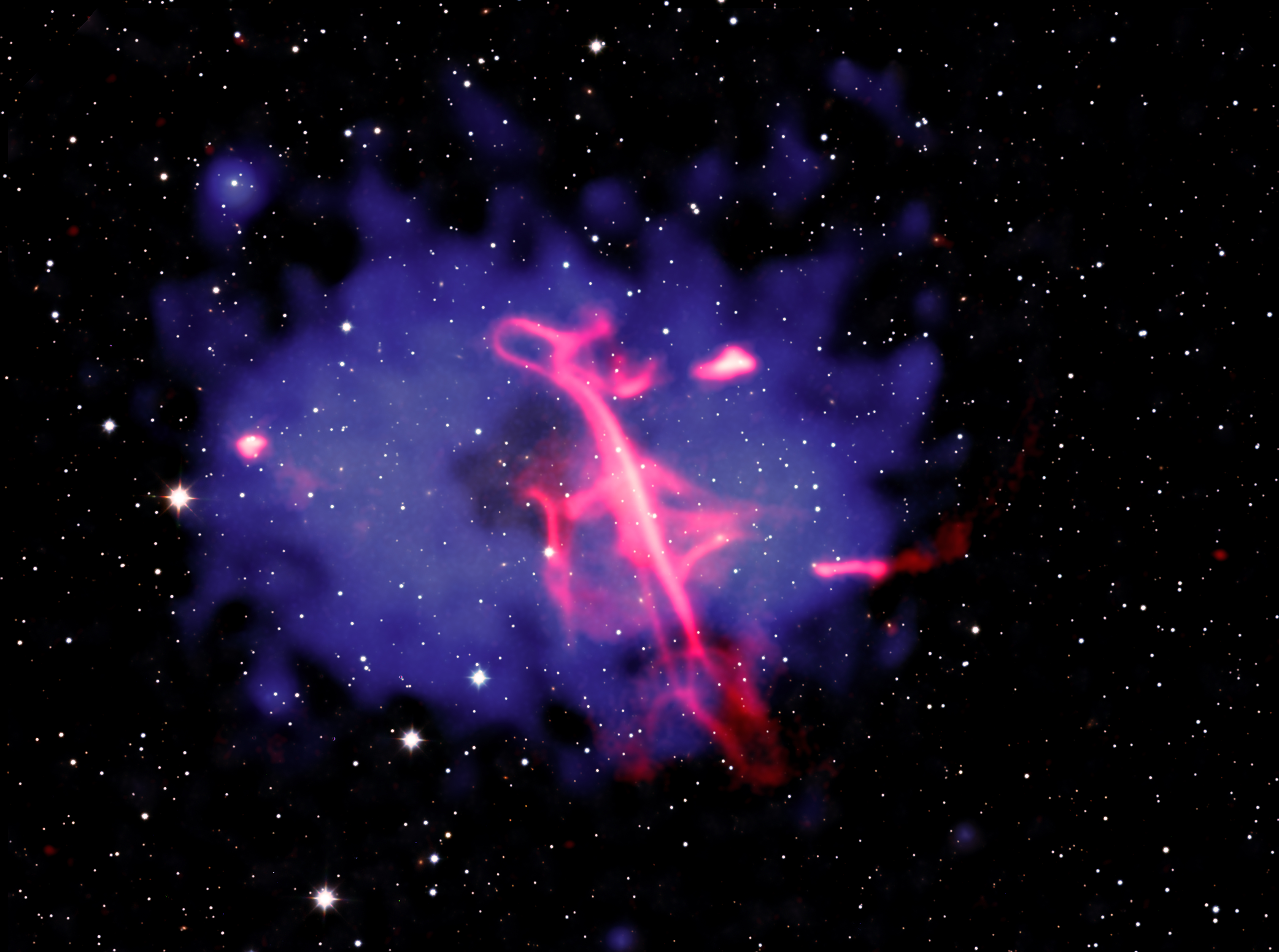
NASA's Chandra Observatory has captured an image of an unusual radio wave structure that visually resembles a musical treble clef. The image, dated October 14, 2026, demonstrates a rare cosmic phenomenon informally named "Treble Clef."
According to researchers working with the telescope's data, the most probable cause of this structure's formation was a large-scale event associated with supermassive black hole activity. It is believed that a powerful energy ejection from the vicinity of the black hole occurred simultaneously with the collision of two massive galaxy clusters, resulting in the formation of this characteristic pattern in the radio band.
Such galaxy cluster collisions are considered among the most energetic events in the Universe since the Big Bang. They are capable of heating intergalactic gas to temperatures of millions of degrees and generating shock waves that can be observed in X-ray and radio wavelengths. The combination of data from various observatories, including Chandra, enables scientists to reconstruct the history of such cosmic cataclysms and better understand the mechanisms of interaction between black holes and their surrounding cluster environment.
The discovery demonstrates the capabilities of modern X-ray astronomy in studying large-scale structures of the Universe and processes that have shaped the appearance of galaxy clusters over billions of years.
This article was generated and published automatically from verified sources. If you spot an inaccuracy, it will be corrected on the pipeline's next pass.