
NASA Astronaut Jessica Watkins Conducts Cell Bioprinting on the ISS
21.10.2026, 18:47·
COLLECTED AND VERIFIED AUTOMATICALLY
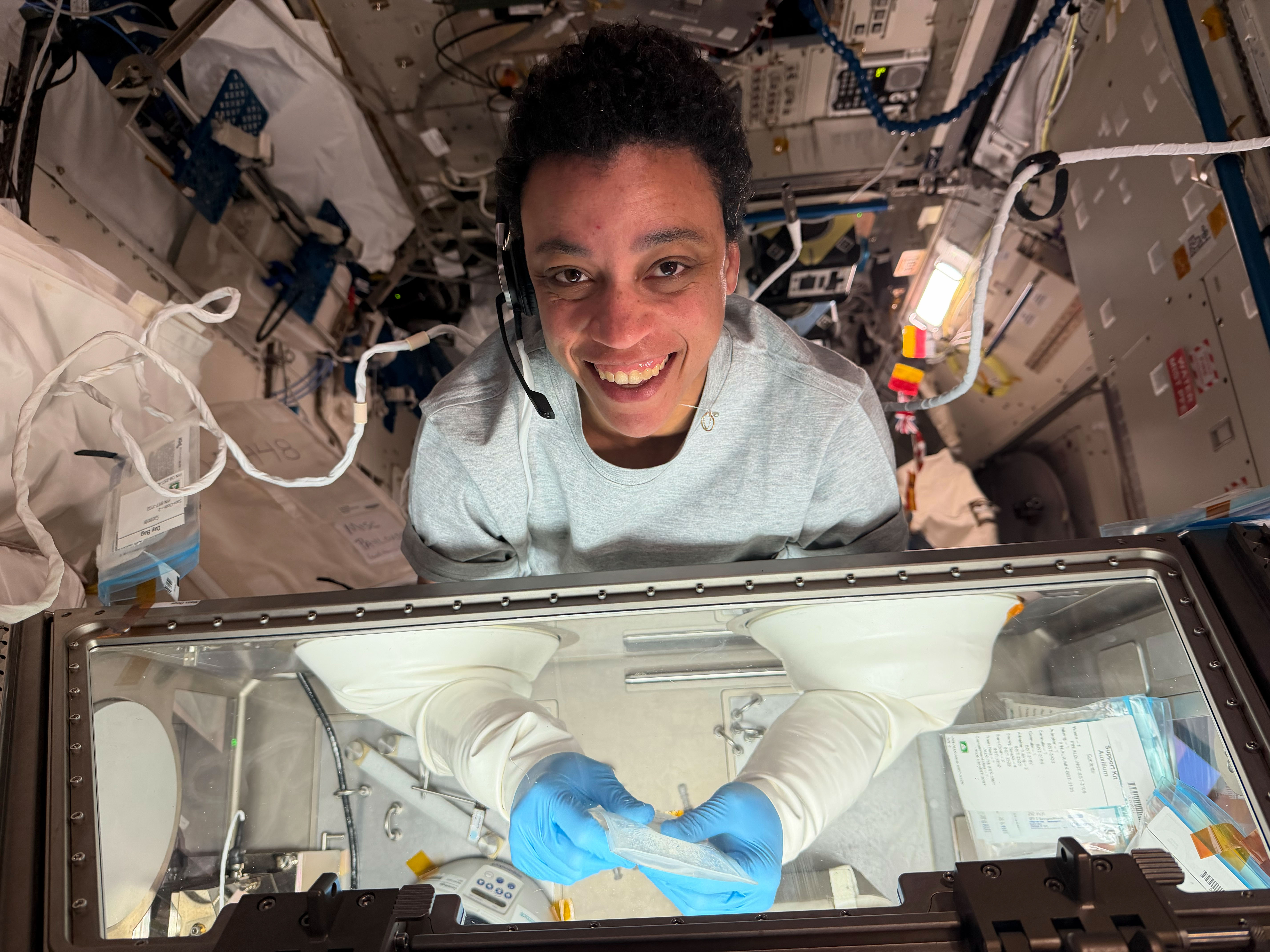
NASA astronaut and expedition flight engineer Jessica Watkins conducted scientific operations aboard the International Space Station, working inside the Kibo laboratory module. Using a specialized Life Science Glovebox for working with living cells, she safely mixed samples of living cells with bioinks, then filled a special cartridge with the resulting mixture.
This work became part of the InSPA-Auxilium Bioprinter-Cell Printing research project, which studies the possibilities of three-dimensional bioprinting in microgravity conditions. Such experiments are aimed at understanding how the absence of gravity affects the formation of tissues and cellular structures, which could be significant for the development of medical technologies on Earth, including regenerative medicine and the creation of artificial tissues and organs.
Research aboard the ISS, similar to this, is regularly conducted by astronauts as part of the station's long-term scientific program, which brings together the efforts of several space agencies. Work with bioprinters in space is of particular interest to scientists, since microgravity eliminates a number of limitations associated with the formation of complex three-dimensional cellular structures, which on Earth are subject to the effects of gravity.
Data obtained from such experiments could contribute to the development of organ and tissue bioprinting technologies for transplantology, as well as deepen understanding of fundamental biological processes. The expedition conducting this research continues a series of scientific missions aimed at utilizing the unique conditions of the space station to advance medicine and biotechnology.
This article was generated and published automatically from verified sources. If you spot an inaccuracy, it will be corrected on the pipeline's next pass.