
NASA's Jet Propulsion Laboratory (JPL) Celebrates 90 Years
21.10.2026, 22:15·
COLLECTED AND VERIFIED AUTOMATICALLY
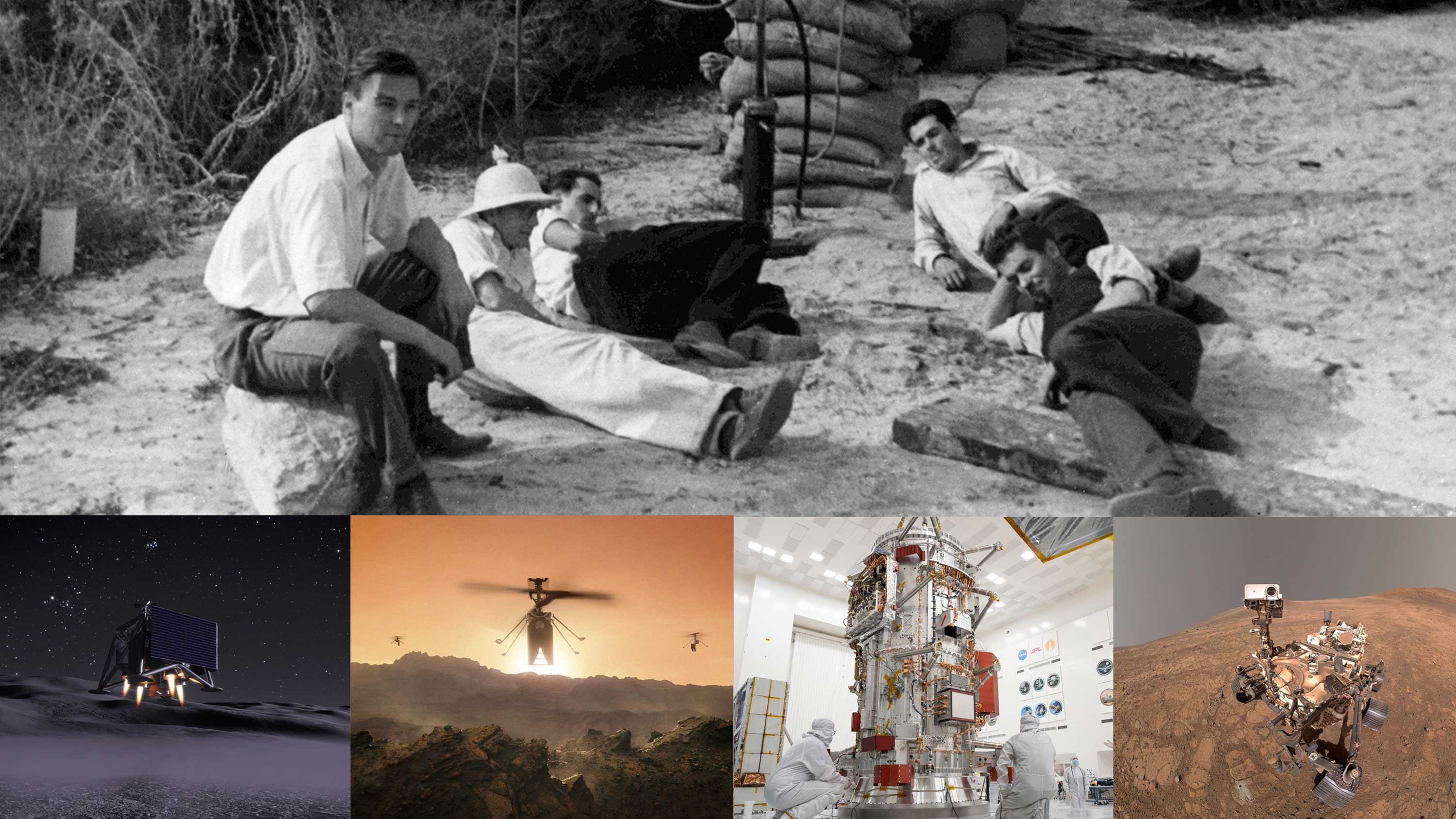
On October 31, 1936, a group of graduate students and enthusiasts from the California Institute of Technology (Caltech) began conducting rocket engine tests in Arroyo Seco Canyon in Pasadena. These experiments marked the beginning of the Jet Propulsion Laboratory (JPL), which today is managed by Caltech on behalf of NASA and celebrates its 90th anniversary.
Over nine decades, JPL has transformed from a small research group into one of the world's leading centers for space exploration. The laboratory was instrumental in the early days of the American space program and contributed to the development of the first American satellite, as well as numerous interplanetary missions—from exploring the far reaches of the Solar System to studying the surface of Mars.
Among JPL's notable developments are automated interplanetary spacecraft exploring the boundaries of the Solar System, unmanned vehicles for lunar exploration, and the Ingenuity helicopter, which achieved the first controlled flights in the atmosphere of another planet—Mars. These projects demonstrate the laboratory's evolution from experimental rocket tests to sophisticated engineering systems operating in deep space conditions.
NASA and Caltech leadership note that, despite its ninety-year history, JPL remains at the forefront of technological innovation. The laboratory plans to continue developing autonomous systems, interplanetary travel, and research into potentially habitable worlds. The anniversary is viewed not as a retrospective, but as an opportunity for a new phase of work—with emphasis on future missions to Mars, the moons of Jupiter and Saturn, and the development of technologies for deep space exploration.
This article was generated and published automatically from verified sources. If you spot an inaccuracy, it will be corrected on the pipeline's next pass.