
Curiosity Rover Preparing to Drill at 'Nazca' Site
28.10.2026, 08:00·
COLLECTED AND VERIFIED AUTOMATICALLY
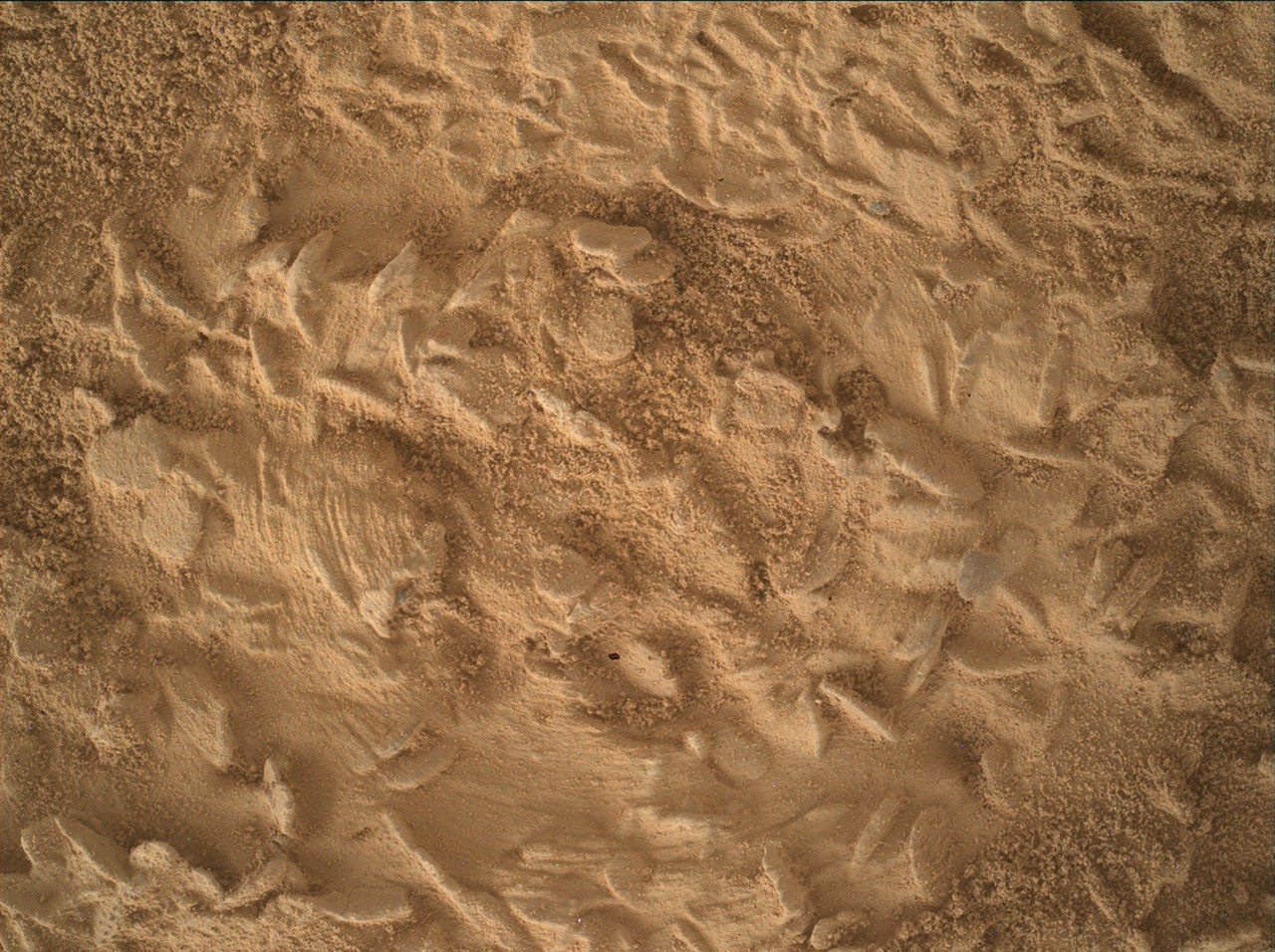
NASA's Curiosity mission specialists continue their investigations of the Martian surface, preparing for a new phase of rock drilling. According to planetologist Lucy Lim from NASA's Goddard Space Flight Center, after completing the previous drilling campaign called 'Basque Lakes', the rover moved several meters to an area located near the rock block 'Chiu Chiu'.
Initially, specialists considered 'Chiu Chiu' as a potential drilling site, but it proved unsuitable for sample collection—likely due to structural or compositional characteristics of the rock. As a result, a decision was made to select a neighboring area, named 'Nazca', where the next drilling operation is planned to take place.
This phase of the mission covers the period from sols 5043 to 5049 (Martian days) of the rover's operations. A team of engineers and scientists is conducting detailed analysis of the terrain to select the optimal point for obtaining a rock sample, which will then be studied by Curiosity's onboard instruments. Drilling is a key element of the mission's scientific program, allowing researchers to investigate the mineralogical and chemical composition of Martian rocks at various depths.
Data obtained from such drilling operations helps scientists better understand Mars' geological history, including possible traces of ancient water and conditions that may have been suitable for life in the past. The Curiosity mission, which has been operating on the Martian surface since 2012, continues to remain one of the most important sources of information about the red planet.
This article was generated and published automatically from verified sources. If you spot an inaccuracy, it will be corrected on the pipeline's next pass.