
Scientists Create Map of Possible Origin Sites for Martian Meteorite Teghaza 001
30.10.2026, 03:03·
COLLECTED AND VERIFIED AUTOMATICALLY
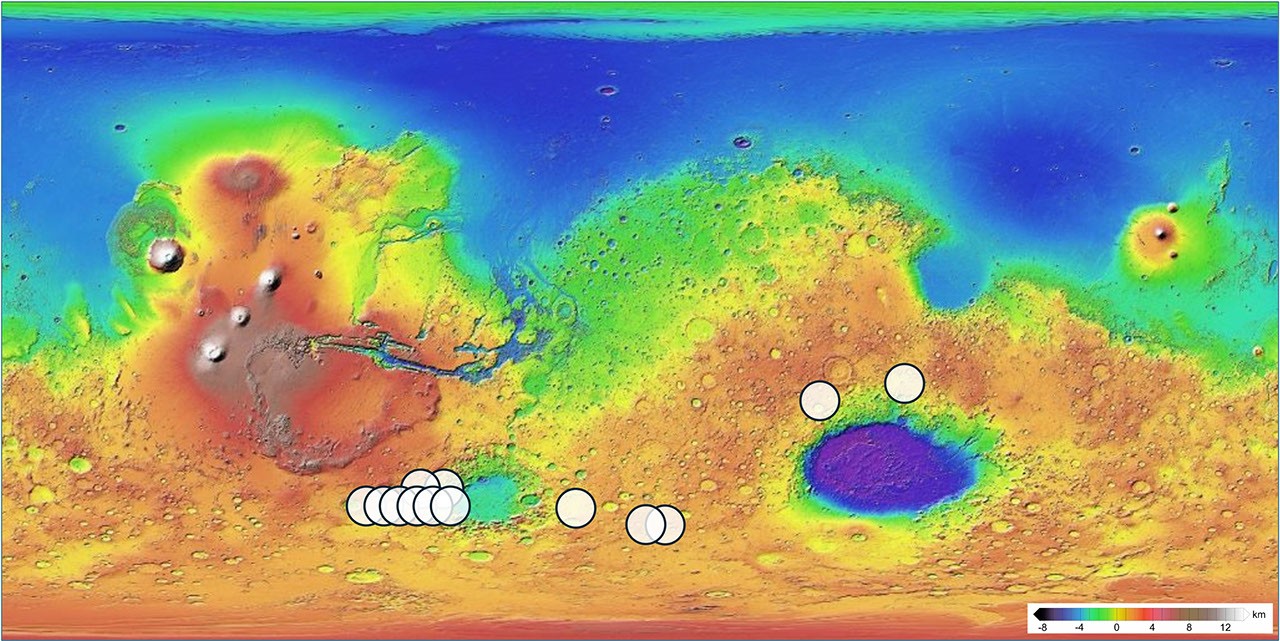
A team of scientists has presented a map of Mars marking 13 potential regions where the Teghaza 001 meteorite — one of the oldest samples of Martian rock discovered on Earth — may have originated. The map was compiled based on analysis of the meteorite's mineralogical and chemical composition, which was compared with remote sensing data of Mars's surface obtained by orbital spacecraft.
Scientists emphasize that it is impossible to establish the exact location from which the meteorite was ejected into space by an impact on Mars's surface. Nevertheless, the distinctive compositional characteristics of Teghaza 001 indicate its connection to the highlands of the planet's southern hemisphere — ancient and geologically complex regions of the Martian crust.
The study of such meteorites is of great importance to planetology, as they provide a rare opportunity to examine Martian material directly under laboratory conditions on Earth, unlike remote observations or rover data. Analysis of ancient rocks such as Teghaza 001 helps scientists reconstruct Mars's geological history, including the processes of crust formation and possible conditions that existed on the planet billions of years ago.
Comparison of samples with cartographic data also demonstrates how modern remote sensing methods, combined with laboratory analysis of meteorites, make it possible to narrow down the possible origins of these samples, even without the possibility of a physical expedition to a specific surface location.
This article was generated and published automatically from verified sources. If you spot an inaccuracy, it will be corrected on the pipeline's next pass.