
Voyager spacecraft continue exploring interstellar space decades after launch
30.10.2026, 13:09·
COLLECTED AND VERIFIED AUTOMATICALLY
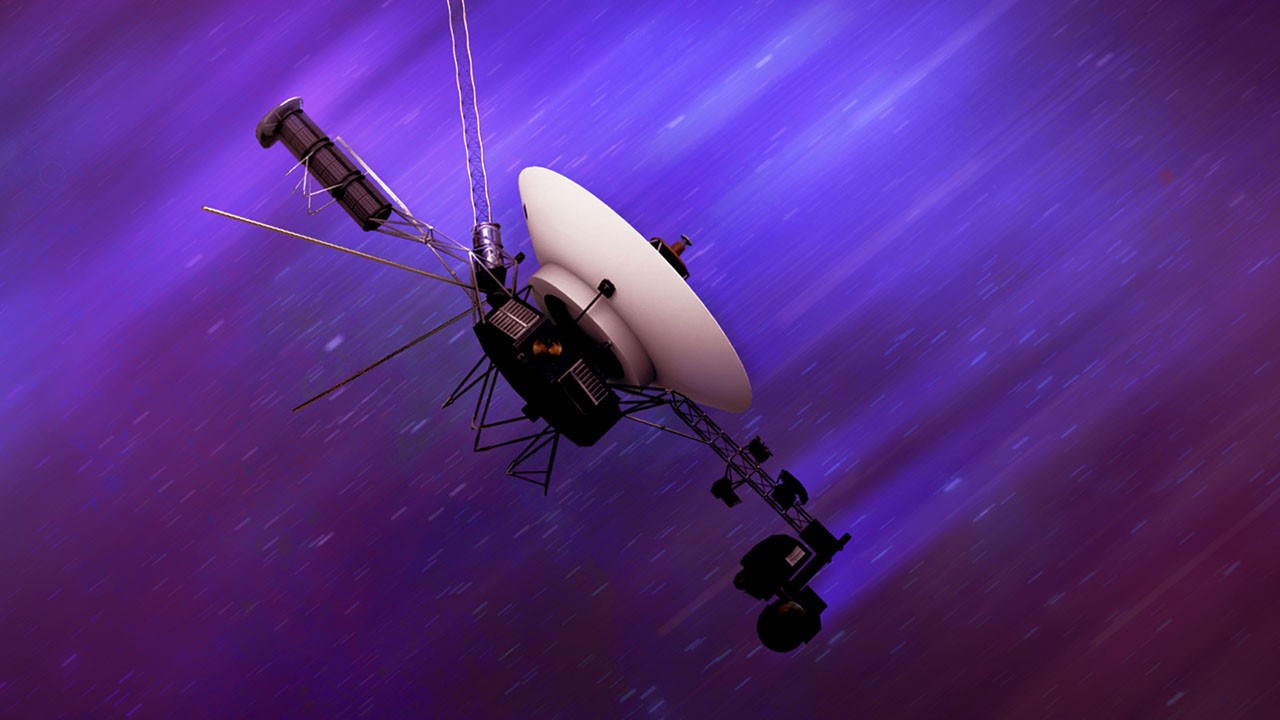
In 1977, NASA launched two twin spacecraft — Voyager 1 and Voyager 2 — taking advantage of a unique alignment of four of the solar system's largest planets: Jupiter, Saturn, Uranus, and Neptune. Such a planetary configuration occurs only once every 175 years, and the mission was named the "Grand Tour."
Thanks to six gravitational maneuvers, the spacecraft were able to conduct detailed studies of the gas and ice giants, as well as several of their moons, transmitting unique images and scientific data back to Earth. These observations significantly expanded scientists' understanding of the structure and characteristics of the outer planets of the solar system.
More than four decades after launch, both probes continue to operate, located beyond the heliosphere — the region where the solar wind gives way to the interstellar medium. Today the Voyagers are distant from Earth by a distance that light traverses in more than a day, making them the most distant human-made objects in space.
The Voyager mission remains one of NASA's most successful and long-lived projects, continuing to transmit data about the distant outer reaches of the solar system and interstellar space, despite the age of the spacecraft and the limited resources of their power systems.
This article was generated and published automatically from verified sources. If you spot an inaccuracy, it will be corrected on the pipeline's next pass.