
NASA Conducts Testing to Enhance Aviation Safety in Supercooled Large Droplet Icing
05.10.2026, 18:51·
COLLECTED AND VERIFIED AUTOMATICALLY
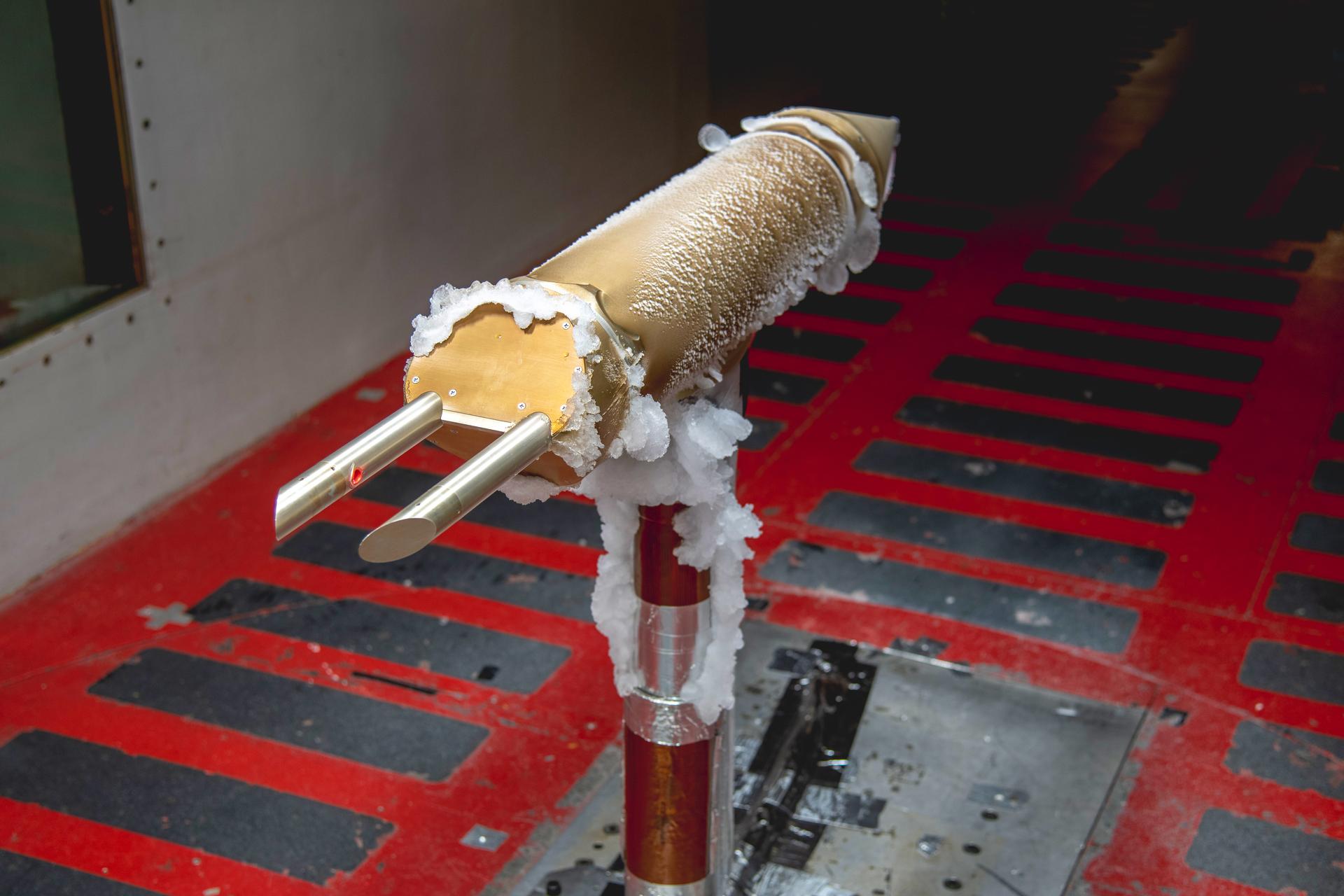
NASA is drawing on its extensive experience and enhancing test stands to address a rare but serious aviation safety issue—icing caused by supercooled large droplets (SLD). This phenomenon occurs when an aircraft enters clouds containing unusually large water droplets that remain in liquid form at temperatures below freezing. Upon contact with the aircraft's surface, these droplets freeze instantly, forming ice in areas not protected by standard anti-icing systems, which can disrupt aerodynamics and pose a flight safety threat.
Although such conditions are relatively rare, they present a serious risk because conventional icing detection and protection systems are designed for smaller droplets. NASA engineers and scientists are working to improve simulation and testing methods to better understand the behavior of such droplets and their impact on aircraft structures.
To this end, the agency is upgrading its wind tunnels and specialized icing tunnels, which allow reproduction of flight conditions in clouds with large supercooled droplets. The resulting data will help aircraft manufacturers and regulatory bodies, including the U.S. Federal Aviation Administration (FAA), improve aircraft certification standards and icing detection systems.
NASA's research aims to expand the scientific foundation needed to develop more accurate models and effective anti-icing technologies, which should ultimately enhance the overall safety level of air transportation.
This article was generated and published automatically from verified sources. If you spot an inaccuracy, it will be corrected on the pipeline's next pass.