
NASA and NOAA Track Ozone Hole Over Antarctica in 2026
04.11.2026, 19:28·
COLLECTED AND VERIFIED AUTOMATICALLY
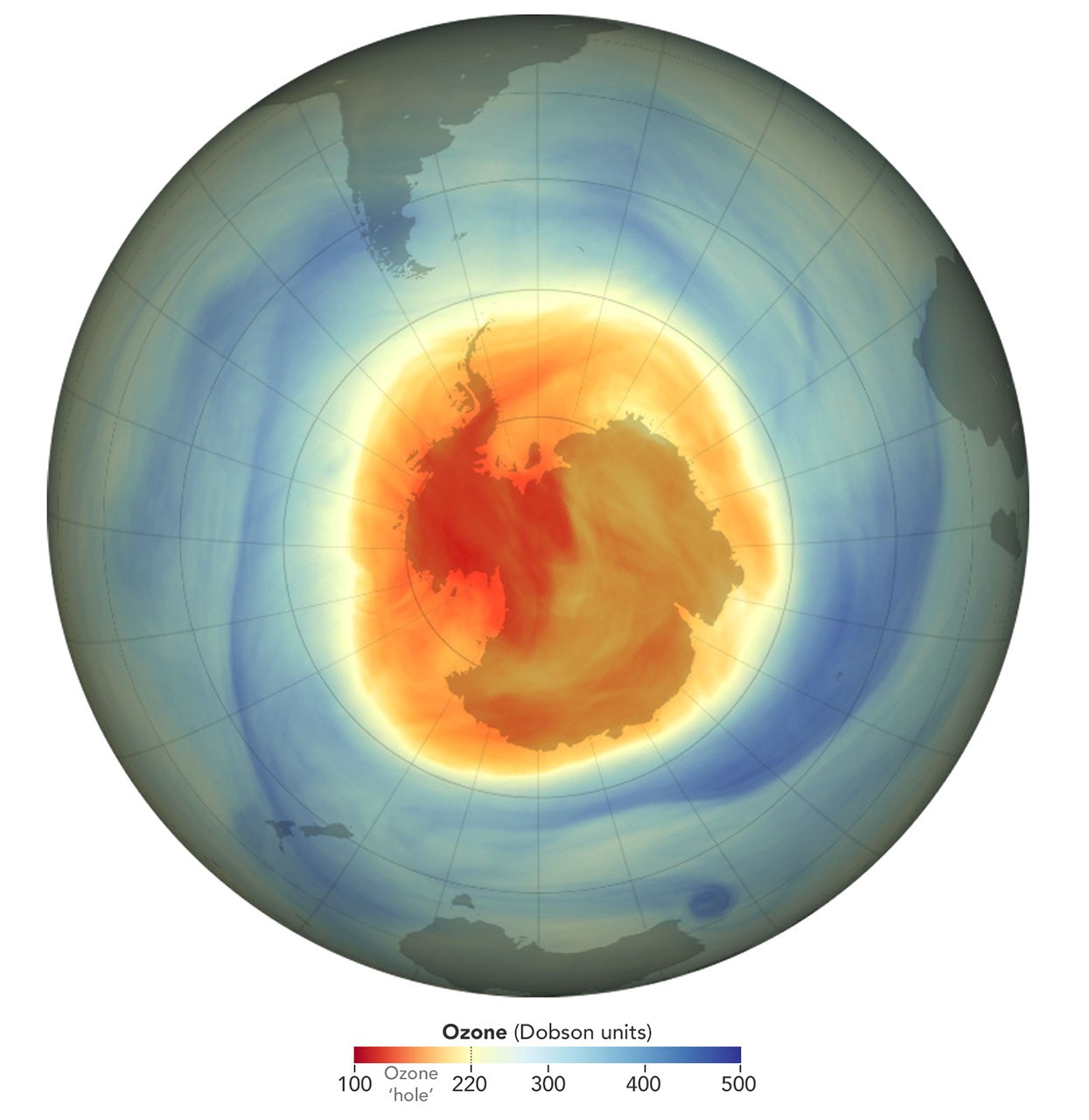
Specialists from NASA and the National Oceanic and Atmospheric Administration (NOAA) conducted an analysis of the ozone layer condition over Antarctica in 2026. According to the agencies, the prevailing weather conditions created favorable circumstances for enhanced ozone destruction in the stratosphere above the South Pole.
Annually, the ozone hole over Antarctica forms during the spring season of the Southern Hemisphere, when cold stratospheric temperatures promote chemical reactions involving chlorine and bromine that destroy ozone. The size and depth of the hole depend on meteorological factors, including stratospheric temperature and air mass circulation.
NASA and NOAA use satellite instruments and ground stations to measure ozone concentration and track the boundaries and area of the hole. The obtained data help scientists evaluate the effectiveness of international measures to limit emissions of ozone-depleting substances adopted under the Montreal Protocol.
The agencies note that despite the long-term trend toward recovery of the ozone layer due to reduced production of chlorofluorocarbons, annual fluctuations in weather conditions can still lead to temporary increases in the scale of ozone destruction. Monitoring continues throughout the Antarctic spring season to obtain a complete picture.
This article was generated and published automatically from verified sources. If you spot an inaccuracy, it will be corrected on the pipeline's next pass.