
Scientists studied the brown waters of Rupert Bay in James Bay
06.10.2026, 07:56·
COLLECTED AND VERIFIED AUTOMATICALLY
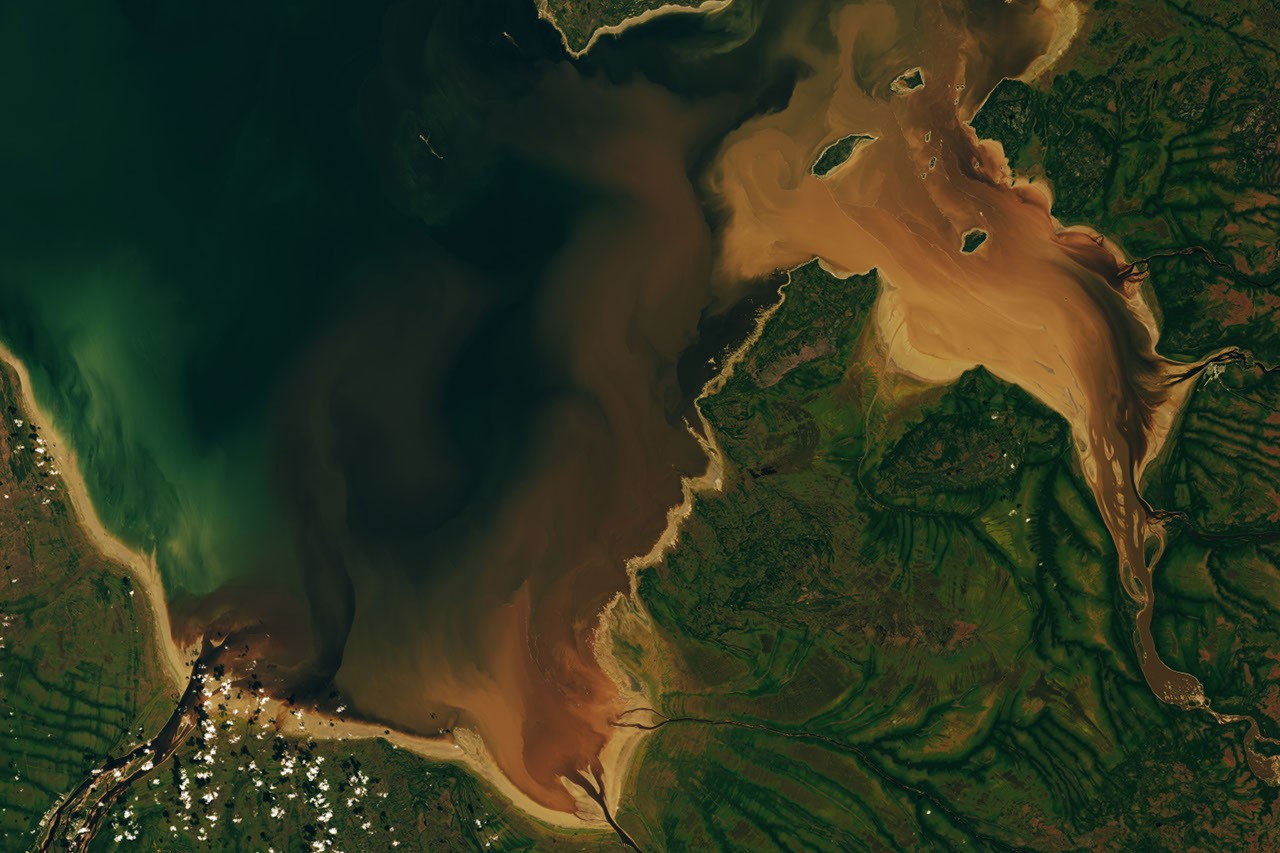
At the southern end of James Bay, in Rupert Bay, the water acquires a characteristic brown tint. This phenomenon arises from the mixing of dissolved organic matter, derived predominantly from surrounding wetlands and forest areas, with suspended sedimentary particles transported by rivers flowing into the bay. Organic compounds rich in humic and fulvic acids color the water in brownish tones, while additional turbidity is created by solid particles carried by river runoff.
Rupert Bay is located in the subarctic region of Canada and is part of the larger James Bay system — the southern extension of Hudson Bay. The processes of mixing fresh river waters with seawater create here a unique dynamic of sediment accumulation and organic matter distribution, making this area an interesting object for scientific observation, including through the use of satellite imagery.
Studying such phenomena helps scientists better understand the carbon cycle in coastal and estuarine ecosystems, as well as track changes in the amount of sedimentary material and organic substances entering from the land. Such data are important for assessing the condition of aquatic ecosystems in northern regions and their response to climate changes affecting snow melt, river runoff, and soil erosion in the watersheds that feed the bay.
This article was generated and published automatically from verified sources. If you spot an inaccuracy, it will be corrected on the pipeline's next pass.