
Webb Telescope Photographs Stellar Jets in NGC 7129 Nebula
06.10.2026, 17:01·
COLLECTED AND VERIFIED AUTOMATICALLY
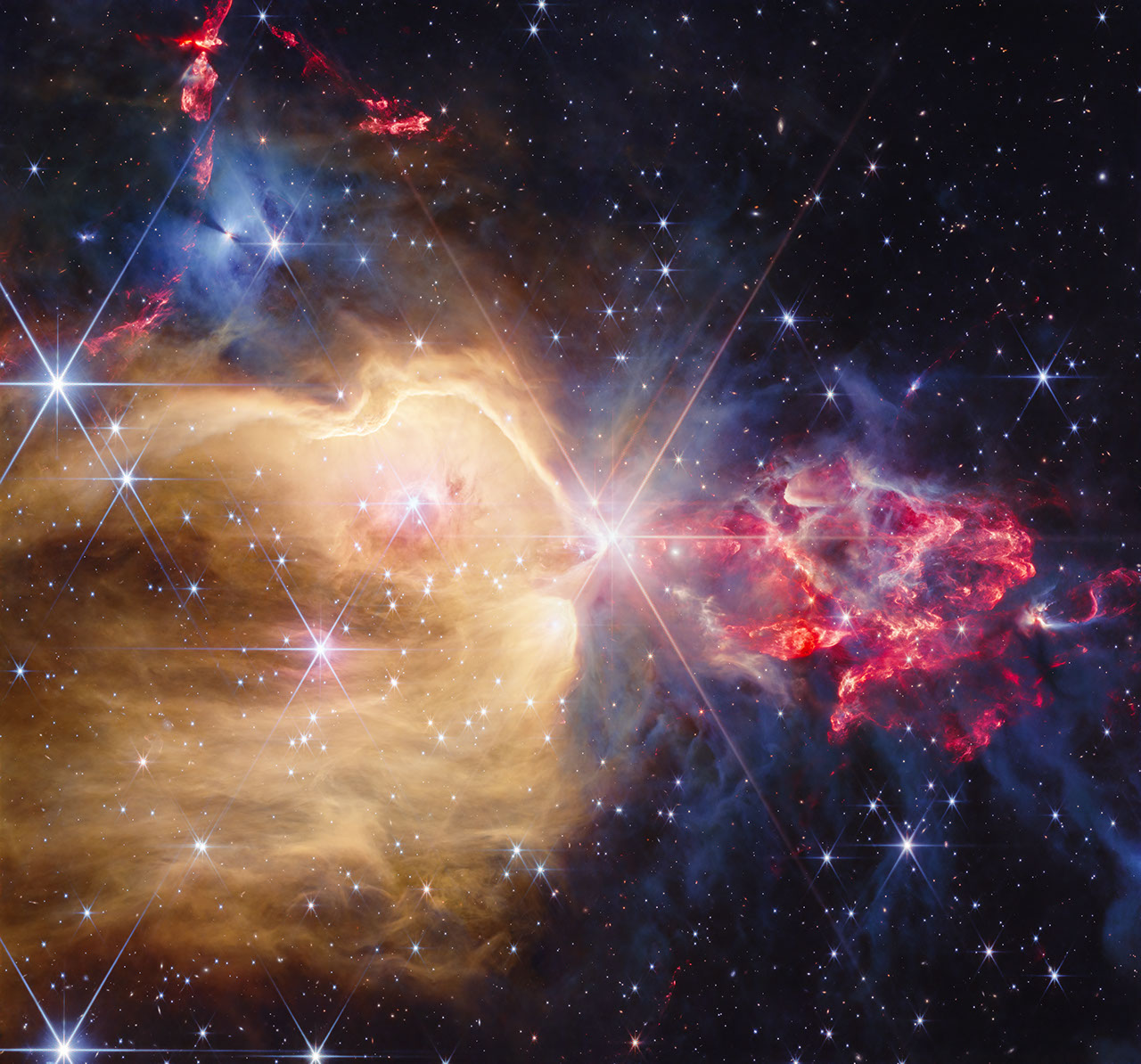
A new image obtained by NASA's James Webb Space Telescope reveals the turbulent processes of star formation in the NGC 7129 region—a so-called stellar nursery located approximately 3,300 light-years from Earth. Thanks to the high sensitivity of the telescope's instruments in the infrared range, scientists have been able to discern numerous young stars that were previously hidden by dense clouds of cosmic dust and gas.
Stars undergo a complex life cycle, beginning in nebulae such as this, where new stars form from clumps of gas and dust under the influence of gravity. In Webb's image, powerful jets of matter—streams ejected by young stars into the surrounding space—are visible, creating an effect of visible "turbulence" in the nebula's structure.
Study of such regions allows astronomers to better understand the mechanisms of star and planetary system formation, as well as to trace the early stages of stellar evolution that are inaccessible to observation in the optical range due to dense dust veils. The unique capabilities of the Webb telescope in penetrating cosmic dust make such images an important source of data for astrophysicists studying the origin of stars and the chemical composition of the interstellar medium.
This article was generated and published automatically from verified sources. If you spot an inaccuracy, it will be corrected on the pipeline's next pass.