
NASA Advances Development of Telescope for LISA Mission
08.10.2026, 19:12·
COLLECTED AND VERIFIED AUTOMATICALLY
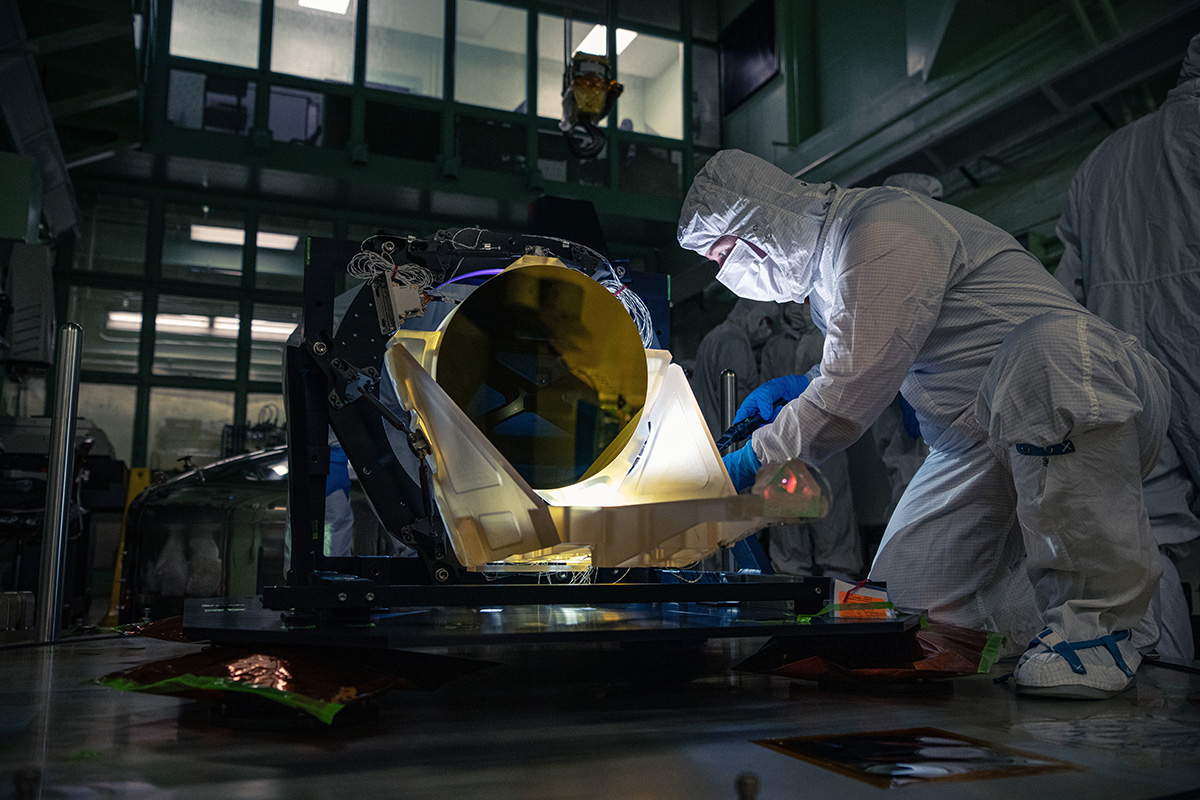
NASA announced progress in developing a new monolithic glass telescope for the LISA mission (Laser Interferometer Space Antenna) — a space observatory designed to detect gravitational waves, which are ripples in the fabric of spacetime. To implement the project, NASA has engaged L3Harris Technologies, which will handle the design, assembly, and integration of the new telescope.
The project involves creating what is known as an Engineering Test Unit — an intermediate stage before manufacturing the final instruments that will be sent into space. This approach allows engineers to refine production technologies, test the telescope's characteristics, and identify potential problems before full-scale construction of flight units begins.
The LISA mission is being developed in collaboration with the European Space Agency (ESA) and will be the first space observatory dedicated to studying gravitational waves. Unlike ground-based detectors such as LIGO, LISA will consist of three spacecraft forming a giant triangle in space with laser beams between them, enabling the detection of low-frequency gravitational waves inaccessible to ground-based instruments.
Telescopes like the one being developed now play a key role in precisely measuring distances between the mission's spacecraft — these measurements with unprecedented accuracy will allow scientists to detect the tiny distortions of spacetime caused by gravitational waves from mergers of black holes, neutron stars, and other catastrophic cosmic events.
The project is part of NASA's broader program to develop technologies for future astrophysical research and strengthens the agency's position as a participant in next-generation international scientific missions.
This article was generated and published automatically from verified sources. If you spot an inaccuracy, it will be corrected on the pipeline's next pass.