Hubble Telescope Photographs Star Cluster in the Large Magellanic Cloud
04.10.2026, 14:58·
COLLECTED AND VERIFIED AUTOMATICALLY
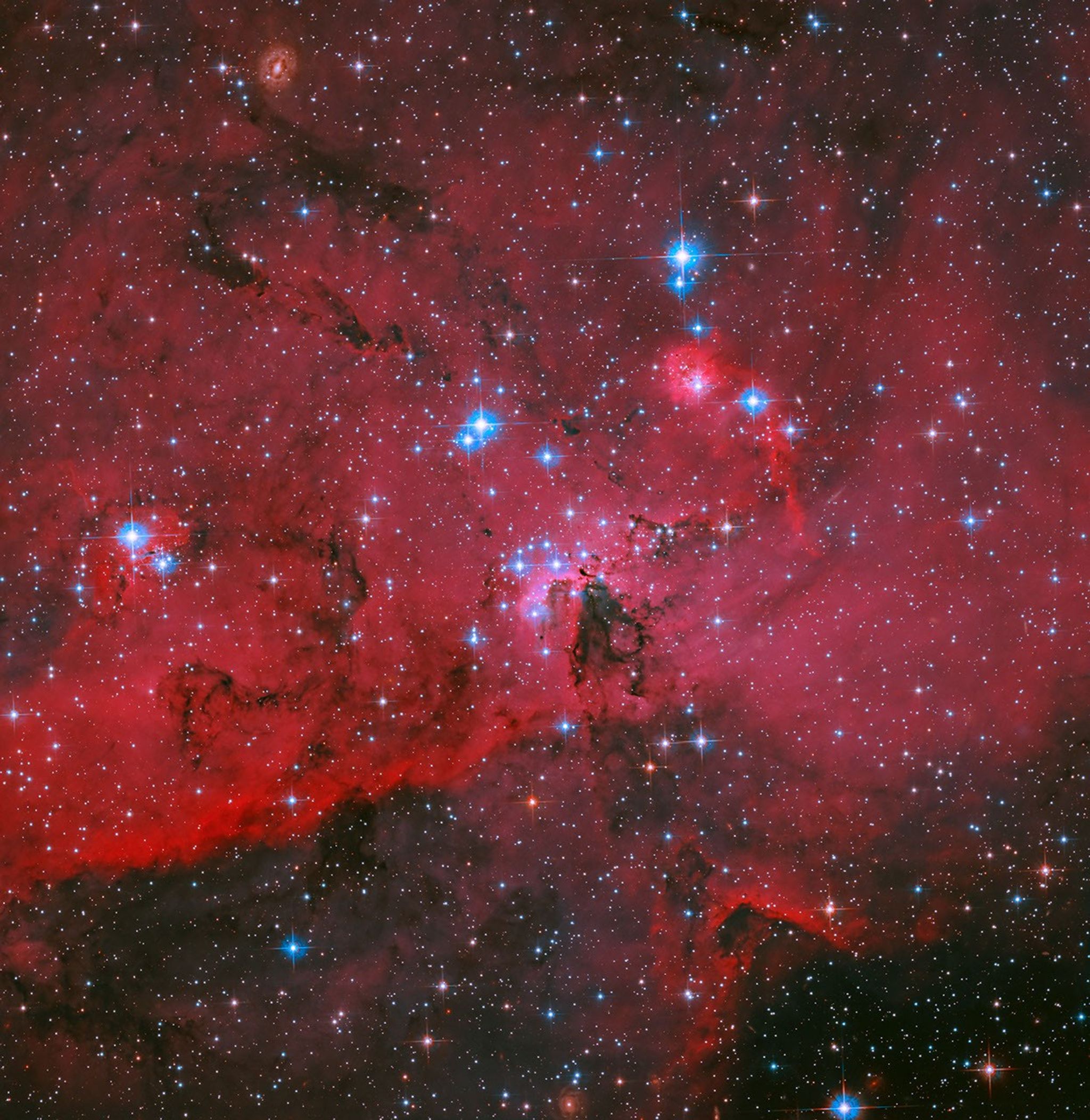
The Hubble Space Telescope has taken a new snapshot of the LH 95 region located in the Large Magellanic Cloud — a dwarf satellite galaxy of the Milky Way. The image captures a brilliant landscape of gas and dust that is heated and illuminated by numerous young stars actively forming in this region.
The Large Magellanic Cloud is considered one of the satellite systems nearest to our galaxy and is of interest to astronomers as a site of intense star formation. The LH 95 region is filled with clouds of interstellar matter from which new stars are born — this process is accompanied by the release of enormous amounts of energy and light.
Young stars in this region ionize the surrounding gas with their radiation, giving the nebula its characteristic glow, which Hubble has captured. Such images help scientists study the processes of star formation and the evolution of the interstellar medium in galaxies other than our own.
Observations of such star-forming regions provide astronomers with important data on how stars are born and develop under conditions different from those characteristic of the Milky Way. The Large Magellanic Cloud, owing to its relative proximity, remains a convenient object for such research, allowing detailed high-resolution images to be obtained.
This article was generated and published automatically from verified sources. If you spot an inaccuracy, it will be corrected on the pipeline's next pass.