NASA's Roman Telescope Embarks on Journey to Final Orbit
04.10.2026, 14:52·
COLLECTED AND VERIFIED AUTOMATICALLY
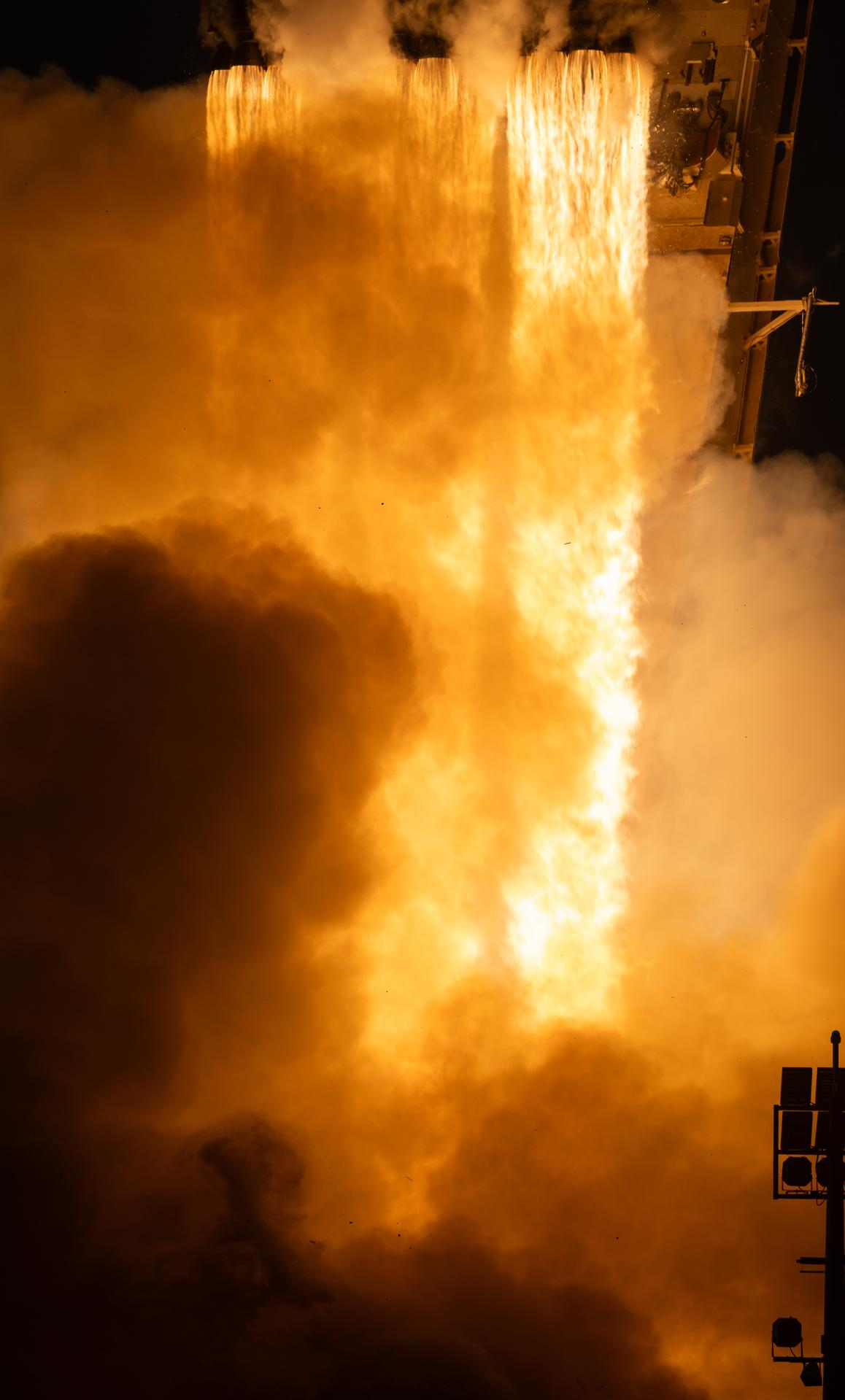
On August 30 at 7:26 a.m. Eastern Time, a SpaceX Falcon Heavy rocket carrying NASA's Nancy Grace Roman Space Telescope lifted off from Launch Complex 39A at Kennedy Space Center in Florida. The spacecraft is facing a three-month journey spanning approximately one million miles to its final orbital destination. The Roman telescope was designed to investigate some of the universe's most enigmatic phenomena, including dark matter and dark energy, which comprise the majority of the cosmos's matter and energy but remain poorly understood. Thanks to its exceptionally wide field of view—hundreds of times greater than the Hubble Space Telescope's capabilities—the new instrument will be able to conduct expansive sky surveys, gathering data on billions of galaxies. Scientists hope the mission will shed light on the nature of cosmic expansion and the mechanisms governing the formation of large-scale cosmic structures. The launch represents an important milestone in the advancement of NASA's astrophysical research and expands the agency's capabilities for exploring the deep cosmos. Once in orbit, the telescope will undergo a series of checks and calibrations before commencing scientific operations.
This article was generated and published automatically from verified sources. If you spot an inaccuracy, it will be corrected on the pipeline's next pass.