50 Years Ago Viking 1 Transmitted the First Image from the Surface of Mars
04.10.2026, 14:57·
COLLECTED AND VERIFIED AUTOMATICALLY
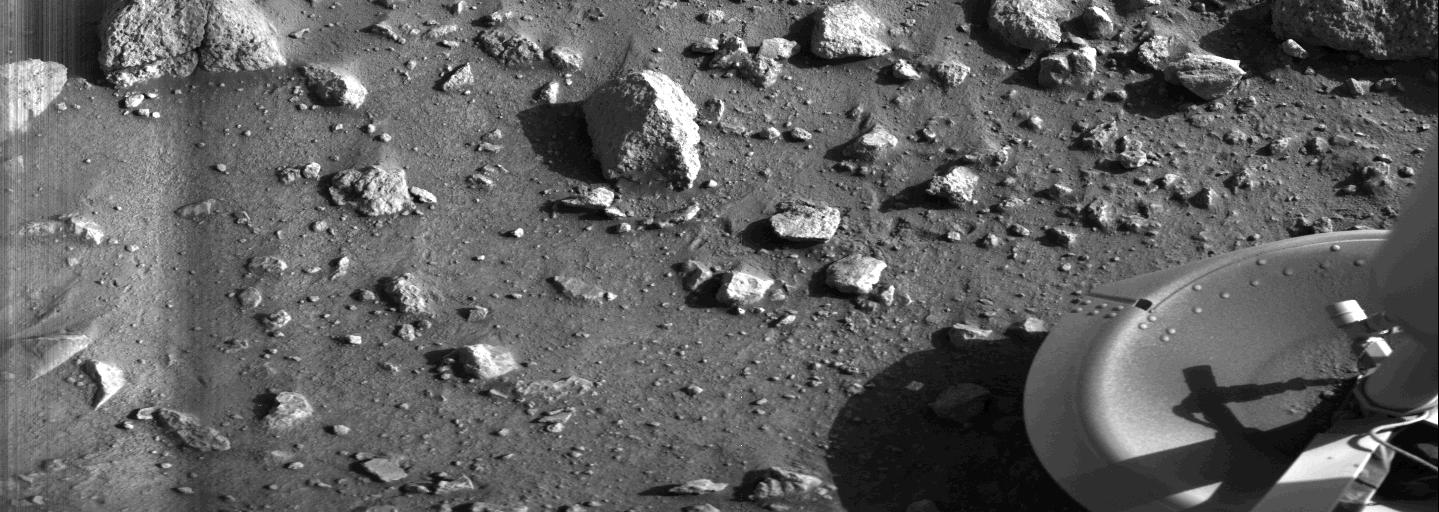
On the morning of July 20, 1976, NASA mission specialists received confirmation that the Viking 1 lander had successfully landed on the surface of Mars. Approximately 40 minutes after this event, the spacecraft transmitted to Earth the first image taken directly from the surface of the Red Planet. This frame became a historic achievement—for the first time, humanity saw the Martian landscape through the eyes of a working apparatus on its surface. The Viking 1 mission was part of NASA's program to study Mars, which included an orbiter and a lander. The lander was equipped with cameras, scientific instruments for analyzing soil and atmosphere, as well as equipment for searching for possible signs of life. The image transmitted shortly after landing showed a rocky, desert-like surface of the planet and was the first of thousands of images that Viking 1 would transmit during its subsequent years of operation. The mission's success opened a new era in Mars exploration and laid the foundation for subsequent expeditions, including rovers and orbiters that continue to study the planet to this day. This event remains an important milestone in the history of space exploration and continues to generate interest nearly five decades after its occurrence.
This article was generated and published automatically from verified sources. If you spot an inaccuracy, it will be corrected on the pipeline's next pass.